
South Korea’s government has proposed a new Future Response Fund worth more than 100 trillion won ($70.7 billion), funded by windfall tax revenue from a semiconductor boom, prompting warnings from economists and lawmakers about weakened parliamentary oversight.
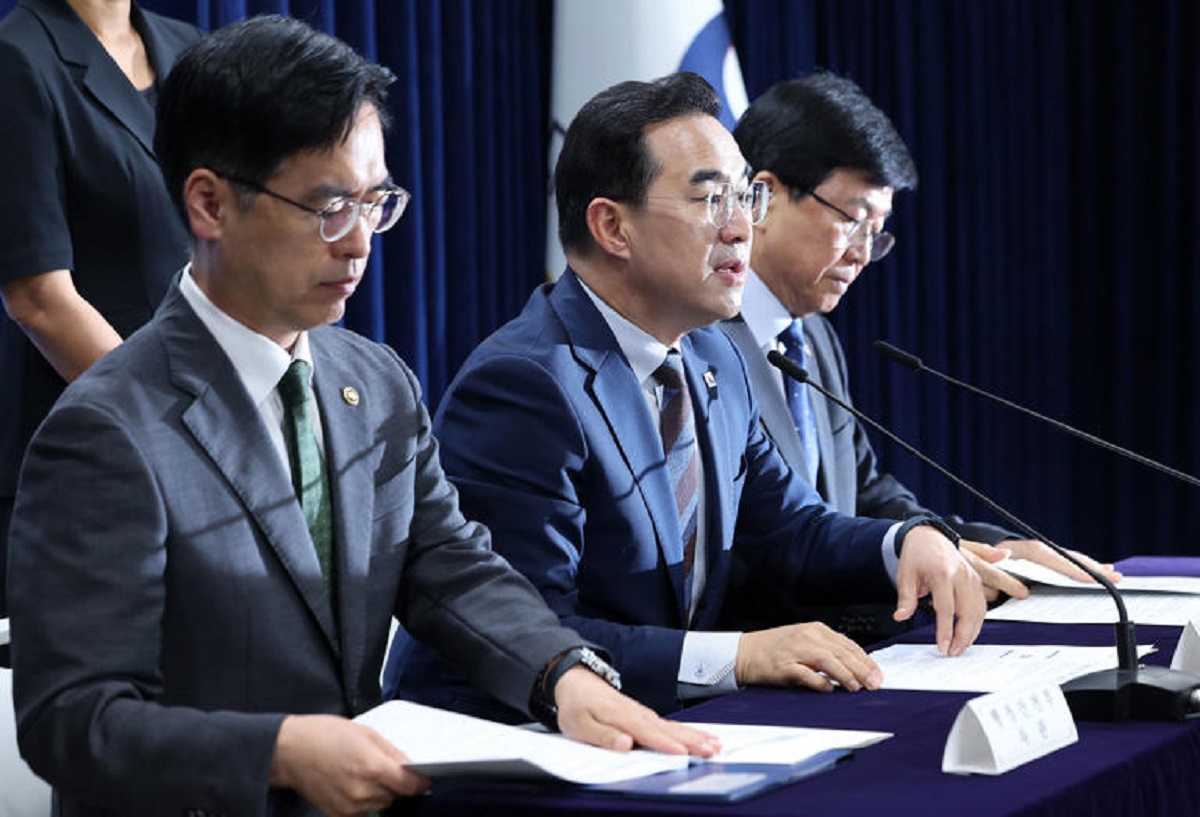
The Ministry of Planning and Budget outlined the plan, called the Future Response Fund Promotion Plan, at the first Fiscal Management Strategy Council meeting on Aug. 21 at the Government Complex in Seoul, Minister Park Hong-keun told reporters.
The fund is designed to channel unexpectedly high tax receipts, driven largely by an artificial intelligence-fuelled semiconductor upturn, into investment in areas including AI, small modular reactors, youth support, regional development and other long-term growth priorities, according to the ministry’s plan.
Officials said the Future Response Fund would draw on four revenue streams: additional tax revenue, excess tax revenue, remaining resources from prior-year surpluses, and returns generated from operating those surplus funds. Additional tax revenue is expected to be the largest contributor.
Under the plan, if internal tax collections in next year’s budget exceed the long-term trend for domestic taxes, the excess would be classified as “additional tax revenue” and diverted into the new fund rather than following the usual budget process.
The ministry did not disclose an exact figure for next year’s contribution but said national tax revenue is projected at more than 500 trillion won, with internal taxes making up roughly 90% of that total. Based on those projections, analysts have estimated the first-year transfer into the fund could exceed 100 trillion won.
Oh Joon-ho, director of the Basic Income Policy Institute, estimated that semiconductor-driven tax revenue could rise by as much as 50 trillion won this year alone, with the cumulative total potentially exceeding 100 trillion won by 2028, according to remarks reported by Korean media.
The scale of the proposed fund would represent roughly one-seventh of South Korea’s annual national budget, which the government separately confirmed will exceed 800 trillion won for the first time.
Critics argue the mechanism could effectively create what some described as a “standing supplementary budget,” managed by the executive branch with less scrutiny from the National Assembly than ordinary budget allocations receive.
Central to the dispute is the government’s use of the term “additional tax revenue,” which differs from “excess tax revenue,” the term defined under South Korea’s National Finance Act. Under existing law, a portion of excess tax revenue must be used to pay down national debt. Opponents say the new terminology could allow the government to route funds around that requirement.
A former senior official at the Ministry of Economy and Finance, speaking to local media, said the fund could improve the speed of policy responses but acknowledged that “the National Assembly’s budget review and checks-and-balances function could be relatively weakened.”
Park Ki-baek, a professor of taxation at the University of Seoul, said fund-based spending typically allows more flexibility than the standard budget process and therefore requires stronger legislative safeguards. He suggested measures such as periodic reviews or mandatory government reporting to the National Assembly every few months.
Some proposals under discussion would allow up to 20% of major expenditure items within the fund to be reallocated without prior parliamentary approval, according to reporting on the plan, a provision that has fuelled additional criticism from fiscal policy analysts.
Park Hong-keun rejected suggestions that the fund would bypass the National Assembly, saying spending would be carried out “in accordance with National Assembly review and legal grounds such as the Framework Act on Fund Management and the National Finance Act.”
The government has said it will pursue legislative amendments needed to formally establish the fund, with details expected to be included in the budget bill.
The proposal comes as South Korea’s central bank, the Bank of Korea, raised its base interest rate to 2.75%, its first increase in three and a half years, a move some economists say reflects growing tension between fiscal expansion and monetary tightening.
Some economists have argued that windfall revenue from the cyclical semiconductor industry should first be directed toward debt repayment and fiscal stability rather than new spending programs, given the sector’s history of boom-and-bust cycles.

Indumwa
Investreet Financial publishes financial education, market insights and practical resources to help readers make more informed financial decisions.