
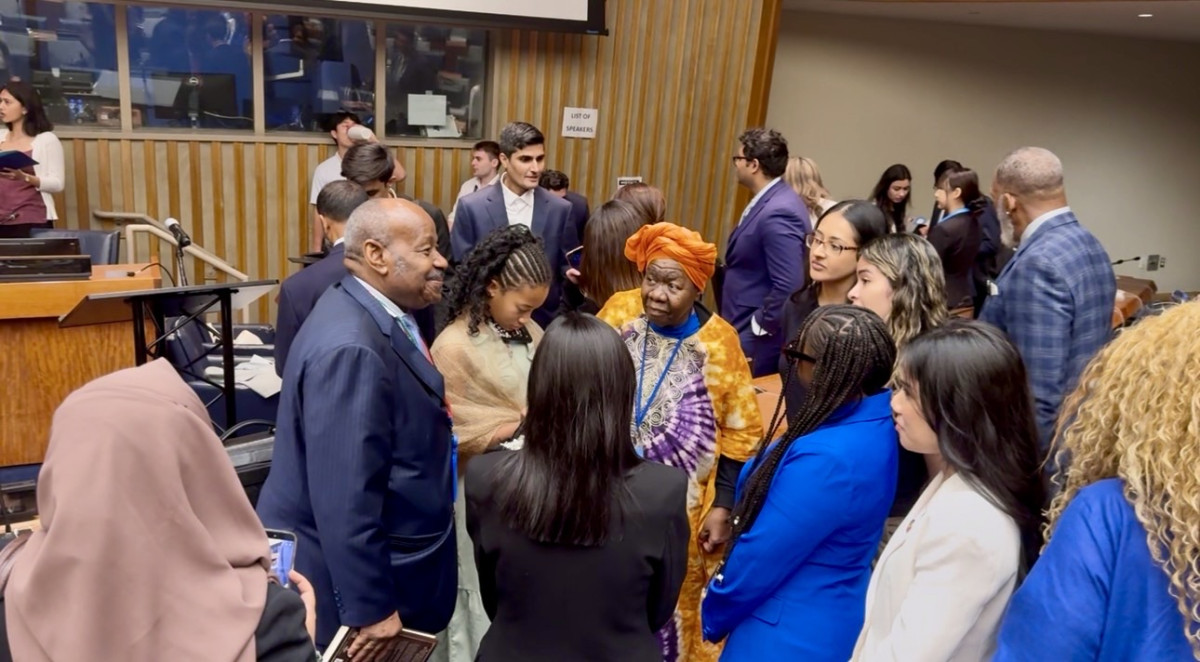
Young leaders gathered at the United Nations in New York on Aug. 12 for a summit focused on the role of youth in shaping artificial intelligence policy and governance, as part of International Youth Day 2026.
The summit, organized by the International Organization of Youth in partnership with the Permanent Missions of Dominica and The Bahamas to the United Nations, brought together more than 600 young leaders.
Under the theme “Different contexts, common aspirations”, International Youth Day 2026 recognizes that, although the lives of young people are shaped by diverse local and national realities, their aspirations are profoundly similar: dignity, opportunity, meaningful participation, decent work, quality education and a sustainable future.
Key subtopics for 2026
1. Global Solidarity: Promoting international cooperation, strategic alliances and equitable access to resources so that young people around the world can thrive.
2. Shared Challenges: Dialogue and collective responses to cross-cutting issues such as employment, education, climate change, digital inclusion and mental health.
3. Youth Innovation: Recognition of practical solutions devised by young people in climate action, digital entrepreneurship and social innovation in resource-limited environments.
This year’s theme pays special attention to young people living in:
• Least Developed Countries (LDCs)
• Landlocked Developing Countries (LLDCs)
• Small Island Developing States (SIDS)
These communities face interconnected challenges such as poverty, climate change, geographic isolation, economic limitations, and unequal access to digital technologies. Despite these obstacles, young people continue to demonstrate exceptional resilience, leadership, and innovation.
The meeting placed young people at the center of discussions about the opportunities and risks posed by artificial intelligence, including its impact on education, employment, healthcare, public services and civic participation.
“Young people are already leading the way as organizers and innovators. But to go further, they need access to the skills that will shape the future, from critical thinking and problem-solving to digital literacy,” said António Guterres, Secretary-General of the United Nations.
During the summit, delegates participated in debates and workshops organized by the International Youth Organization and presented a Youth-Led Declaration on AI Policy and Governance.
This document will directly contribute to the UN’s efforts to define digital governance, including the Digital Global Compact.
The summit’s organizers said young people, who are expected to live longest with the effects of AI, remain underrepresented in discussions where technology priorities and governance frameworks are established.
The event sought to give young people a direct role in developing recommendations on how AI should be governed, with the resulting declaration intended to be carried into the U.N. system, the organizers said.
The summit came as governments and international organizations increasingly focus on ensuring young people have the skills and access needed to participate in an economy being reshaped by digital technologies.
The International Telecommunication Union, marking International Youth Day through a regional seminar in Montevideo, Uruguay, said developing young people’s skills in emerging technologies, including AI, was important to closing digital gaps and strengthening digital innovation.
The United Nations has also emphasized the importance of youth participation in technology-related decision-making. The U.N. says more than 1.2 billion young people worldwide are central to efforts to achieve the Sustainable Development Goals and should have meaningful opportunities to participate in decisions affecting their future.
The focus on AI also reflects broader concerns about responsible technology use, including digital inequality, privacy, bias and the need for stronger digital and critical-thinking skills among young people.
The United Nations Youth Bureau emphasized that technological change is not a future projection, but a present reality. It urged the equitable development of human-centered skills (critical thinking, empathy, and resilience) and AI literacy, recognizing young people as co-creators of educational policies and models.

Indumwa
Investreet Financial publishes financial education, market insights and practical resources to help readers make more informed financial decisions.