
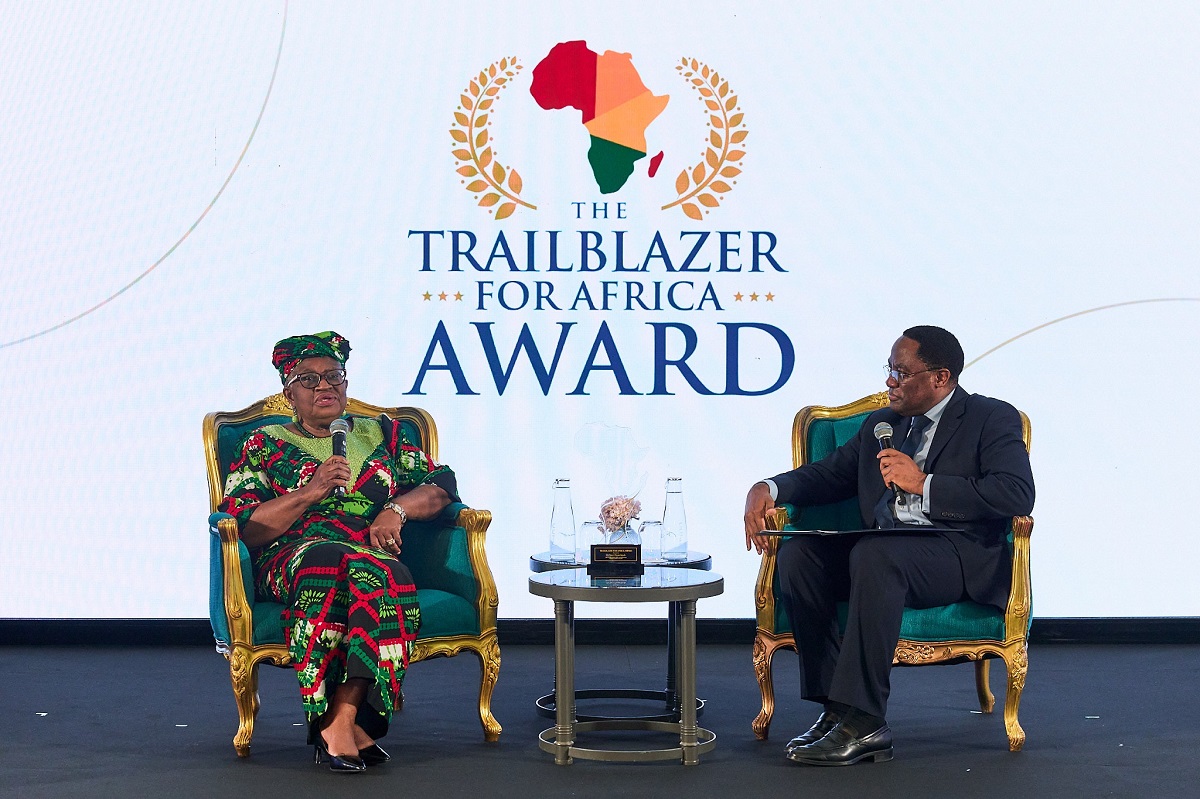
African policymakers and development finance leaders renewed calls for industrialisation, local mineral processing and greater domestic investment at a Bangkok gathering where World Trade Organization chief Ngozi Okonjo-Iweala received the 2026 Trailblazer for Africa Award.
The October 14 Africa@WorldBank/IMF event, held alongside the World Bank and International Monetary Fund Annual Meetings, brought together ministers, central bankers, researchers and business leaders to discuss Africa’s economic transformation and role in global financial decision-making.
Okonjo-Iweala urged African countries to move beyond exporting unprocessed natural resources and capture more economic value through manufacturing, industrial investment and job creation, according to an account of the event published by Pan African Visions.
Africa seeks greater value from mineral wealth
Africa’s industrialisation challenge centres on how countries can translate their natural resources into higher-value products, stronger domestic industries and employment.
Okonjo-Iweala said Africa possesses about 30% of the world’s critical minerals but exports much of its mineral wealth without sufficient local processing, according to Pan African Visions. Critical minerals are materials used in industries such as electronics, manufacturing and clean-energy technologies.
Processing more of these resources within African economies could help countries retain a greater share of the value generated by extraction, while supporting manufacturing supply chains and employment.
However, expanding local processing requires investment in infrastructure, reliable energy, skills development and industrial capacity. Governments must also create conditions that enable businesses to invest in productive activities and compete in international markets.
The WTO director-general’s remarks placed industrialisation at the centre of discussions about how African economies can strengthen their participation in global trade.
The award recognised Okonjo-Iweala’s leadership in international finance, development and trade. She described recognition from African institutions as particularly meaningful in her acceptance remarks, according to the report.
Okonjo-Iweala became the first woman and the first African to lead the World Trade Organization when she took office in March 2021. The WTO is responsible for administering global trade agreements, providing a forum for trade negotiations and helping resolve trade disputes.
Domestic investment seen as a source of growth
The Bangkok discussions also highlighted the need for African countries to mobilise more of their own financial resources to support infrastructure and industrial development.
Okonjo-Iweala cited approximately $250 billion in pension assets held collectively by Nigeria, Kenya and South Africa, according to Pan African Visions. She argued that domestic capital could play a greater role in financing African development.
Pension funds can provide long-term investment capital for infrastructure and productive businesses when investments are consistent with their legal obligations, risk limits and beneficiaries’ interests.
Greater domestic investment could help African economies finance projects that might otherwise depend heavily on foreign capital or public borrowing. However, directing pension assets towards development priorities requires sound governance, transparent investment decisions and appropriate risk management.
African governments face competing demands for public spending as they seek to expand infrastructure, create jobs and maintain debt sustainability. Mobilising domestic savings is therefore one potential source of financing, rather than a substitute for responsible fiscal management or international investment.
The discussions in Bangkok placed these financing questions alongside the broader challenge of building industries capable of creating employment and supplying higher-value goods to domestic and international markets.
Initiative seeks stronger African participation
The Africa@WorldBank/IMF gathering is an initiative championed by Denis Foretia, executive chairman of the Nkafu Policy Institute and founder of the Denis and Lenora Foretia Foundation.
According to Pan African Visions, the platform seeks to bring African policymakers, researchers, businesses and development institutions into closer engagement with international financial organisations.
Its organisers argue that African countries should have a stronger voice in discussions about global economic policies that affect their development prospects.
The initiative began with a Washington gathering in October 2025 before moving to Bangkok in October 2026. Its expansion reflects an effort to sustain discussions on industrialisation, trade, debt, investment and economic governance beyond individual international meetings.
The platform also provides an opportunity for African institutions to exchange policy ideas and develop relationships with international partners. The extent to which those discussions translate into policy changes, investment commitments or measurable economic outcomes will be important in assessing its longer-term impact.
Thailand offers lessons on industrial development
Foretia used Thailand’s economic transformation to illustrate how sustained investment in productive industries can change a country’s economic structure.
He recalled Thailand’s transition from an economy heavily reliant on agricultural products towards manufacturing activities, including electronics and automobiles, according to Pan African Visions.
The comparison highlights a challenge facing African economies that export agricultural commodities and minerals but import many processed goods and manufactured products.
Moving into higher-value production can require coordinated policies covering transport, electricity, technical education, access to finance and industrial infrastructure. It also depends on businesses developing the capacity to meet quality standards and compete in export markets.
Africa’s economies differ substantially in size, resources, infrastructure and industrial capacity, meaning that development strategies will need to reflect national circumstances. Nevertheless, the Bangkok discussions underscored the importance of increasing productive capacity rather than relying solely on commodity exports.
Debt, jobs and regional trade on the agenda
The programme included discussions on industrialisation, value chains and jobs, with participants examining debt sustainability, energy infrastructure and local manufacturing.
A separate session, titled “Africa Transforming Africa: From Ambition to Action”, considered how governments and institutions could turn development plans into measurable results.
Participants included representatives of African development and policy institutions, according to Pan African Visions. The discussions addressed the relationship between development strategies, investment and the practical implementation of economic reforms.
Trade between Africa and Asia also featured in the programme. Participants considered opportunities for stronger commercial partnerships, cross-border payments, regulatory cooperation and improved access to markets.
These issues are relevant as African countries seek to expand regional and international trade while improving the competitiveness of domestic businesses. More efficient payment systems and better market access can support commercial activity, although their impact depends on regulatory coordination, infrastructure and demand for goods and services.
Washington meetings planned for 2027
The next Africa@WorldBank/IMF gatherings are scheduled for April 14 and October 6, 2027, in Washington, DC, according to Pan African Visions.
The meetings are expected to provide further opportunities for African policymakers and development institutions to engage with international financial organisations on investment, industrialisation, trade and economic governance.
The Bangkok gathering brought those priorities into focus, with Okonjo-Iweala’s remarks highlighting the importance of processing more natural resources locally and increasing the economic benefits that African countries retain from their exports.

Indumwa
Investreet Financial publishes financial education, market insights and practical resources to help readers make more informed financial decisions.