


 By
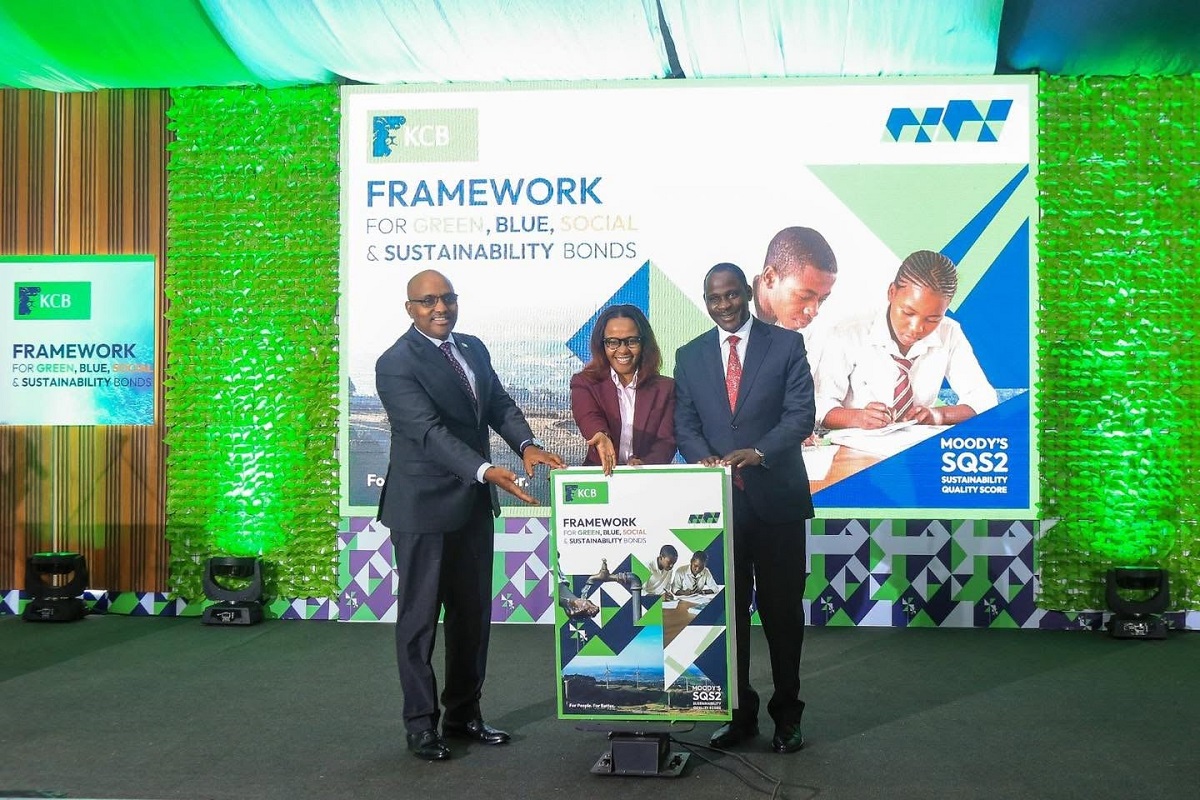
By KCB Group, East Africa’s largest bank by assets, launched a Sustainability Bond Framework on Wednesday, paving the way for a Medium-Term Note Programme of up to 300 billion Kenyan shillings ($2.3 billion) over five years, the bank said.
The Kenyan lender said the first tranche of the programme would be up to 100 billion shillings, subject to regulatory approvals and market conditions.
The framework, unveiled at the KCB Leadership Centre in Karen, Nairobi, sets out how the bank will select and finance projects with environmental and social benefits, KCB said in a statement.
Proceeds raised under the KCB sustainability bond will be ring-fenced and channelled to eligible green, blue and social projects, the bank said.
Target sectors include renewable energy, green buildings, clean transportation, sustainable water management, agriculture, the blue economy, affordable housing, micro, small and medium-sized enterprises, and women- and youth-led businesses.
Credit rating agency Moody’s assigned the framework a Sustainability Quality Score of 2, rated “Very Good,” the bank said. The score assesses the framework’s approach to identifying, evaluating and selecting projects eligible for funding.
KCB Group Chief Executive Officer Paul Russo said the launch built on two decades of work by the bank to structure financing solutions with measurable economic and social impact.
“The launch of the Sustainability Bond Framework is a natural progression of the work the Group has been doing over the last two decades to structure innovative financing solutions and support investments that have a meaningful economic and social impact,” Russo said.
“This is about bringing capital, purpose and accountability and using finance as a force for good while creating sustainable value for all our stakeholders.”
He added that the framework was designed to move sustainability commitments beyond corporate pledges and into the direct allocation of capital toward projects that support East Africa’s shift to a low-carbon, climate-resilient and inclusive economy.
The framework provides for two financing approaches, according to KCB. Under the Use of Proceeds model, funds raised are allocated specifically to qualifying green, blue and social projects.
Sustainability-linked bonds and loans, by contrast, are tied to the bank meeting sustainability performance targets, without requiring proceeds to be earmarked for particular projects.
The bond programme will be issued by KCB Bank Kenya, the group’s Kenyan banking subsidiary.
Under the social financing component, the bank said proceeds would target underserved and vulnerable populations, including through affordable housing, support for small businesses, and initiatives aimed at job creation and improving livelihoods.
Russo pointed to the KCB Foundation’s 2Jiajiri programme, which supports youth entrepreneurship and skills training, as an example of how access to capital can generate wider economic benefits, including job creation and stronger household incomes.
KCB said the new framework builds on a sustainability strategy the bank adopted in 2008, structured around financial, economic, social and environmental pillars.
The bank has disbursed more than 187 billion shillings in green loans since 2022, according to KCB. In the past year alone, the group extended 48.8 billion shillings in green financing across its regional markets, funding projects in renewable energy, sustainable agriculture, green buildings, clean transportation and water management, the bank said.
KCB operates across Kenya, Uganda, Tanzania, Rwanda, Burundi, South Sudan and the Democratic Republic of Congo.
The bank’s move follows a broader push by African lenders to tap sustainable finance markets to fund infrastructure and climate-related investment.
The Kenya Bankers Association, the Nairobi Securities Exchange and the Climate Bonds Initiative, working with the United Nations Environment Programme Finance Initiative, have coordinated efforts to expand green bond issuance among Kenyan lenders, mapping business activities to sustainability goals under the Kenya Green Bond Program.
East Africa faces substantial financing gaps for climate adaptation and infrastructure projects, a shortfall that has pushed governments and lenders in the region to seek alternative capital-raising tools, including green, blue and sustainability-linked bonds.
The planned KCB note programme would rank among the largest sustainability-labelled bond programmes announced by a Kenyan bank to date. It remains subject to approval from Kenyan regulators, including the Capital Markets Authority, before any tranche can be issued.