
 By
By Kenya’s National Infrastructure Fund has appointed Dr James Mworia as its founding chief executive officer, effective Monday, as the government moves to operationalise the state-backed vehicle created to mobilise private capital for infrastructure.
The appointment follows a competitive recruitment process, the Fund’s Board said in a notice announcing James Mworia as CEO of the National Infrastructure Fund.
Mworia, who holds the title MBS, will lead the Fund as it begins implementing its mandate under the National Infrastructure Fund Act, 2026. The law established the Fund as a vehicle to accelerate national infrastructure development and mobilise private and non-traditional sources of financing.
The Fund is intended to support infrastructure investment while reducing Kenya’s reliance on public borrowing to finance commercially viable projects.
The government has identified transport, energy, information and communications technology, water and agriculture among the critical areas where infrastructure investment is required, according to the appointment notice.
The Fund will seek to translate infrastructure requirements into projects that can attract long-term investment from domestic and international capital markets. It is also expected to support the development, operation and eventual transfer or recycling of mature infrastructure assets.
Kenya’s Parliament said when the National Infrastructure Fund Bill was assented to in March that the new framework was intended to unlock additional financing for critical infrastructure and attract capital from sources including pension funds, collective investment schemes, sovereign wealth funds and climate finance institutions.
The National Infrastructure Fund Act became law after President William Ruto assented to the legislation on March 9, with the Act published on March 11 and commencing on March 25, according to Kenya Law.
Mworia brings more than 25 years of professional experience in investment management, enterprise development, capital allocation and investment banking, according to the Board’s notice.
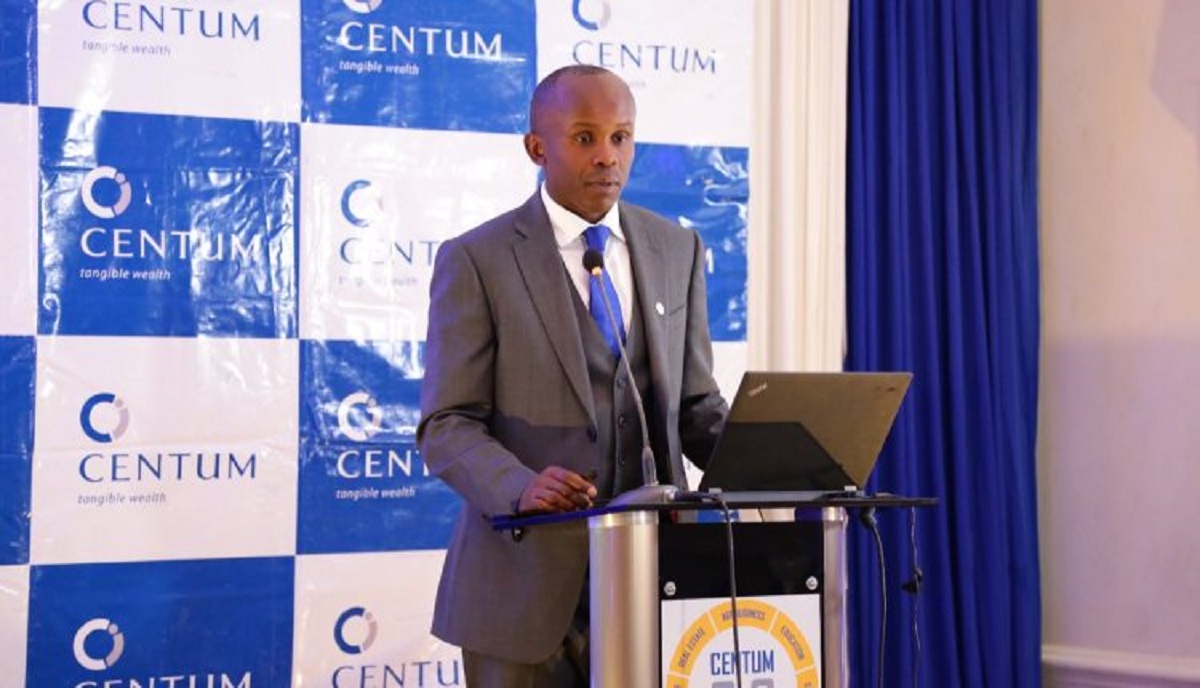
He is currently the Group Chief Executive Officer and Managing Director of Centum Investment Company Plc, a position he has held since 2005, the notice said. He also previously served as Managing Director of Centum’s investment company.
The notice said Mworia had led Centum through the establishment, acquisition and transformation of enterprises in sectors including financial services, healthcare, real estate and other businesses.
His previous experience includes investment origination, evaluation, structuring and execution, as well as asset management, governance and financing. The Board said this background would be relevant to the Fund’s objective of building commercially viable infrastructure enterprises.
Mworia has also served on the boards of the Nairobi Securities Exchange and the Central Depository and Settlement Corporation, according to the notice.
The Board said he had mobilised financing from commercial banks, development finance institutions, debt capital markets, institutional investors and strategic partners during his career.
That experience is expected to be relevant as the National Infrastructure Fund seeks to attract private and institutional capital into infrastructure projects.
The Fund forms part of a broader government effort to change how Kenya finances large development projects. In December 2025, the government said Cabinet had approved the National Infrastructure Fund and a Sovereign Wealth Fund as part of its long-term economic transformation strategy.
The government has said the infrastructure fund is expected to help mobilise as much as 5 trillion shillings over a decade for priority projects. President Ruto has also urged development finance institutions, pension funds and private investors to participate in the programme.
The government has said the Fund will rely on mechanisms including private investment, capital markets and proceeds from the monetisation of public assets rather than relying solely on government borrowing.
The National Infrastructure Fund’s structure also reflects an attempt to treat infrastructure projects as long-term investments capable of generating commercial returns, rather than solely as government expenditure.
In July, National Treasury Cabinet Secretary John Mbadi appointed six members to the Fund’s board for three-year terms. Mworia was among those appointed, alongside Fahima Ali Ahmed Zein, Christopher Kibui Maranga, Latoya Ouna, Lawrence Kibet and Mohammed Abdirahman Hassan.
The board appointments were part of the process of establishing the Fund’s institutional structure before it began full operations.
The appointment of a founding chief executive now gives the Fund an executive leadership team responsible for implementing its investment strategy and building its operating structure.
According to the Board’s notice, Mworia’s initial priorities will include establishing the organisation, people and investment systems; strengthening governance and risk-management frameworks; developing an investable project pipeline; mobilising investment capital; and progressing projects through appraisal, structuring and execution.
The Fund will also seek to establish partnerships with government, investors, financiers, developers and communities, the notice said.
The Board said Mworia’s experience in investment and enterprise development would support its objective of creating an institution capable of converting infrastructure needs into investment opportunities.
For Kenya, the creation of the Fund represents a new approach to financing infrastructure at a time when the government is seeking alternatives to debt-funded development. Parliament has described the vehicle as a mechanism for mobilising domestic and international capital for strategic projects.
Mworia’s appointment therefore places responsibility for turning that financing model into an operational investment institution on an executive with extensive experience in private-sector investment and capital allocation.