
 By
By Kenya is seeking a deeper partnership with the Asian Infrastructure Investment Bank (AIIB) to secure financing for transport, energy and connectivity projects, Prime Cabinet Secretary and Foreign Affairs Cabinet Secretary Musalia Mudavadi said on Wednesday.
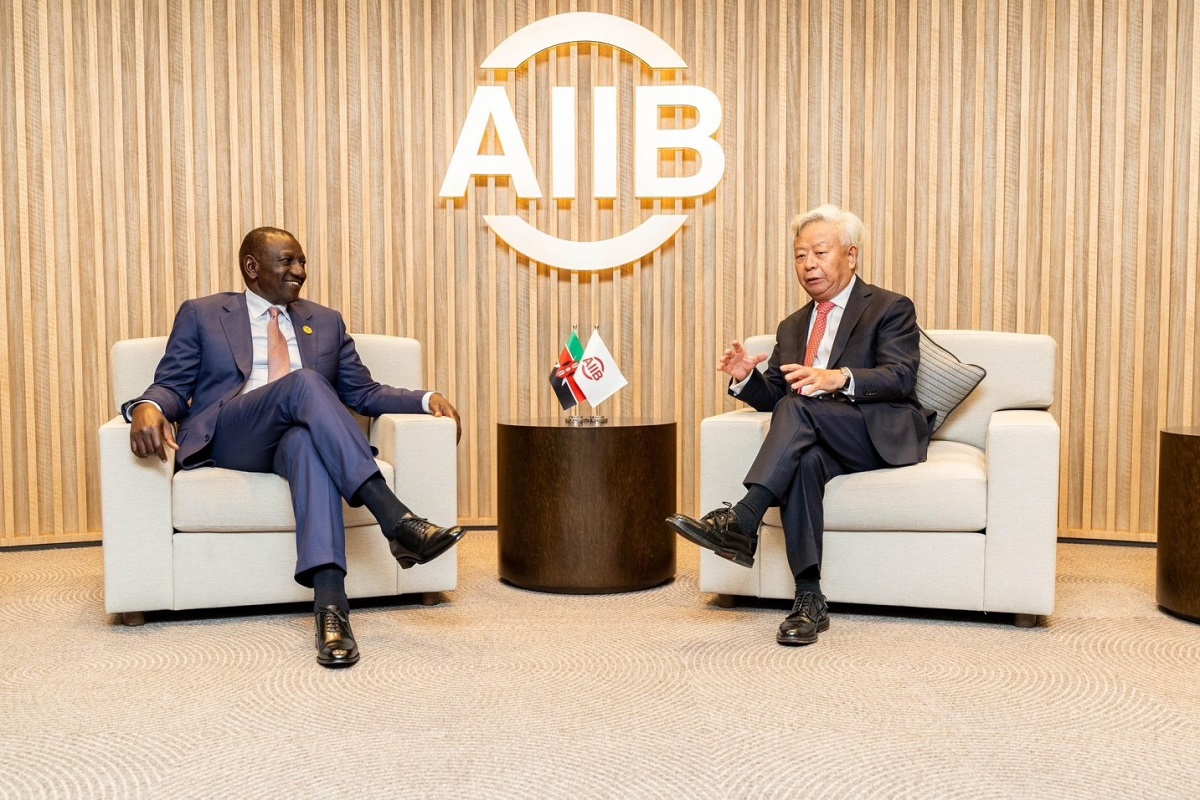
Mudavadi held talks in Nairobi with AIIB President Zou Jiayi, during which he proposed that the multilateral lender base its Sub-Saharan Africa office in the Kenyan capital, according to a statement from the Office of the Prime Cabinet Secretary and Ministry of Foreign and Diaspora Affairs.
The Kenya-AIIB partnership talks focused on cooperation in transport infrastructure, aviation, renewable energy, water and sanitation, and rural connectivity, the statement said.
“Kenya’s membership in AIIB is important and deliberate. We believe the Bank’s mandate aligns well with our national development priorities and our policy of diversifying partnerships with development partners that support sustainable socio-economic development,” Mudavadi said, according to the statement.
Mudavadi told Zou that Nairobi’s standing as a diplomatic and financial hub made it a suitable base for AIIB’s operations across the region.
“Kenya would be honoured to host the AIIB Sub-Saharan Africa Office in Nairobi. This would facilitate the Bank’s engagement with African countries and strengthen cooperation in infrastructure, connectivity and sustainable development,” Mudavadi said.
The government said it was ready to work with AIIB to expand the bank’s footprint in Africa through investments in green infrastructure and connectivity, according to the statement.
The talks also touched on specific infrastructure projects that Kenya wants AIIB to support, the statement said.
The government welcomed AIIB’s backing for a feasibility study on the Rironi-Mau Summit Private Public Partnership (PPP) project, which officials said would improve regional connectivity and access to the Port of Mombasa for Kenya and neighbouring landlocked countries.
Mudavadi also asked AIIB to help fast-track approval processes for the Jomo Kenyatta International Airport (JKIA) PPP project, which he described as central to Kenya’s position as a regional aviation, tourism and trade hub.
Other areas identified for potential AIIB financing included renewable energy, last-mile connectivity, rural roads linking counties with neighbouring countries, and the extension of the Standard Gauge Railway, according to the statement.
The meeting also addressed Kenya’s efforts to raise funds from Chinese financial markets through a proposed $500 million Panda Bond, the statement said.
Mudavadi said closer cooperation between AIIB, the African Development Bank and Kenya’s National Treasury would support the country’s access to Chinese capital markets.
“The Panda Bond will help Kenya diversify its sources for development financing while strengthening the country’s financial and economic partnership with China and other international financial institutions,” Mudavadi said, according to the statement.
Panda Bonds are yuan-denominated debt instruments issued by foreign entities in China’s domestic bond market, offering issuers access to Chinese investors and an alternative to dollar-denominated borrowing.
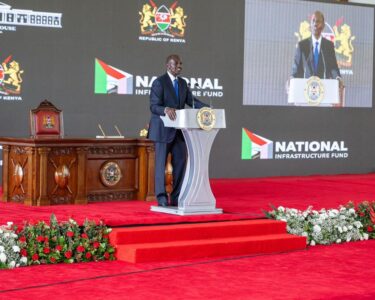
Mudavadi told AIIB officials that Kenya had legislated the National Infrastructure Development Fund (NIDF) and the Sovereign Wealth Fund as mechanisms to mobilise private capital for infrastructure projects, according to the statement.
He asked AIIB to provide technical expertise to help establish the funds as credible, internationally recognised institutions capable of mobilising resources for strategic national projects, the statement said.
Mudavadi congratulated Zou on her recent appointment as AIIB president during the meeting, the statement said.
The Prime Cabinet Secretary’s office described Kenya’s AIIB membership as strategic, saying the alignment reflected the bank’s focus on sustainable infrastructure and innovation matching Kenya’s development priorities.
AIIB is a Beijing-based multilateral development bank that finances infrastructure projects across Asia and, increasingly, other regions including Africa. Kenya is among the bank’s African member states seeking to tap its financing for large-scale development projects.
The talks come as Kenya continues to pursue diversified sources of development financing beyond traditional Western lenders, including deeper engagement with Chinese-backed institutions and capital markets.