
 By
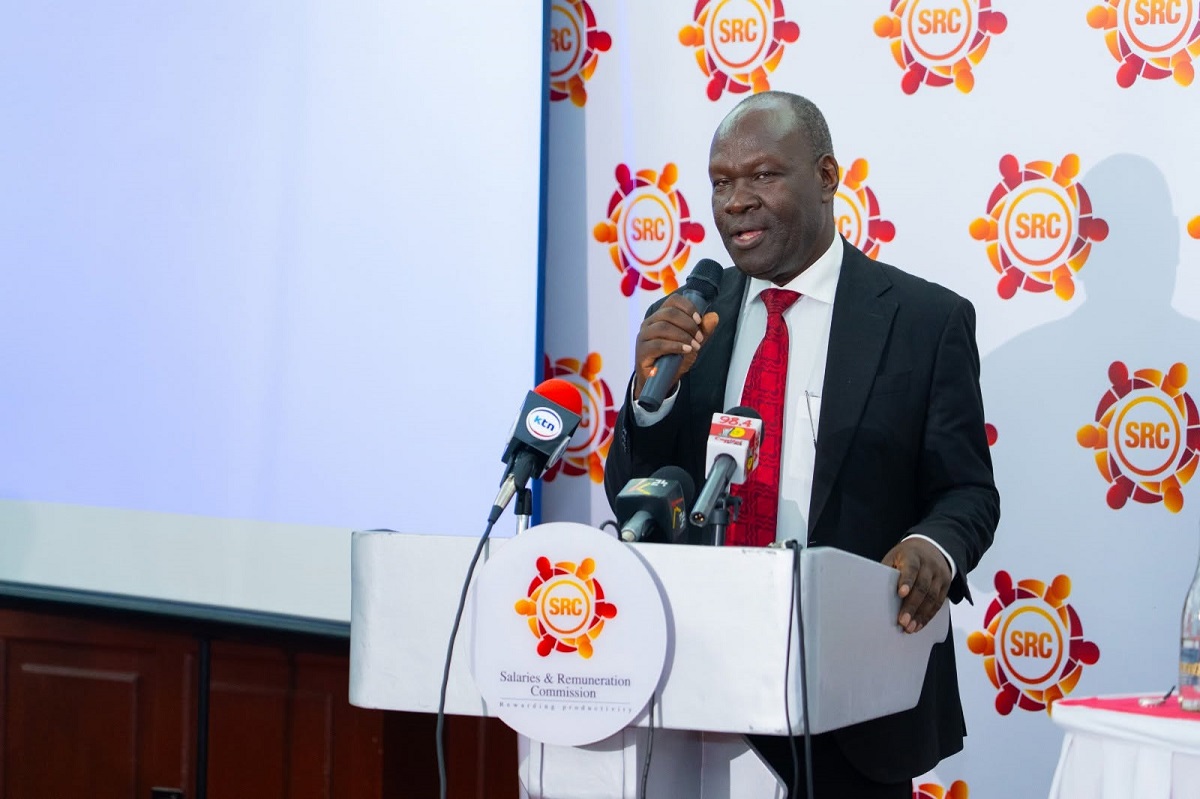
By Kenya’s public wage bill is provisionally projected to rise to Sh1.287 trillion ($9.9 billion) in the financial year 2025/26 from Sh1.247 trillion a year earlier, the Salaries and Remuneration Commission (SRC) said on Friday.
The Sh40 billion increase represents growth of about 3.2%, with the SRC attributing the rise largely to expansion of the teaching, health and security sectors and periodic salary adjustments to reflect changes in the cost of living.
The figures were contained in the SRC’s Fourth Quarter Wage Bill Bulletin, covering April to June 2026, the final quarter of the 2025/26 financial year.
Despite the increase in the Kenya public wage bill, its ratio to ordinary government revenue is expected to improve, the commission said. The ratio stood at 41.82% in 2024/25 and is projected to fall to 40.68% in 2025/26.
The SRC attributed the decline to fiscal consolidation measures and improved ordinary revenue collection.
The commission is responsible under Kenya’s Constitution for regularly reviewing the remuneration and benefits of state officers and advising national and county governments on remuneration for other public officers.
At county level, the SRC said average spending on wages as a share of ordinary revenue remained above the 35% threshold provided under Kenya’s Public Finance Management framework during the 2025/26 financial year.
Personnel emoluments, or spending on employees, rose to Sh171.36 billion during the first nine months of 2025/26, from Sh154.94 billion in the corresponding period of 2024/25.
That represented an increase of about 11%.
Despite the rise in personnel spending, the average ratio of personnel emoluments to county revenue declined to 44.12% from 46.8% over the same period, according to the SRC.
Only five counties recorded wage-bill-to-revenue ratios below the 35% threshold during the first nine months of the financial year, the commission said.
They were Tana River at 27%, Kwale at 30%, Nakuru at 30%, Uasin Gishu at 31% and Kirinyaga at 32%.
At the other end of the scale, Taita Taveta and Homa Bay each recorded ratios of 63%, while Machakos recorded 58%.
The SRC has previously said a sustainable public sector wage bill is important because excessive personnel costs can reduce resources available for development and other public services.
At the national government level, personnel spending remained below the 35% benchmark during the first nine months of both 2024/25 and 2025/26, the bulletin said.
The ratio of personnel emoluments to total revenue, however, increased slightly to 28.1% from 27.6%.
At the same time, personnel expenditure as a proportion of total government expenditure declined to 28% from 30.5%.
The figures highlight the different pressures facing national and county governments as Kenya seeks to contain recurrent spending while maintaining public services.
The increase in the Kenya public wage bill has coincided with growth in the number of public sector employees.
The SRC, citing data from the 2026 Economic Survey, said public sector wage employment grew by 4.6% in 2025, compared with growth of 3.1% in 2024.
The number of people employed in the public service increased from 884,700 in 2020 to 1.07 million in 2025, indicating continued expansion of the public workforce.
The Teachers Service Commission remained the largest public sector employer.
TSC employment increased by 6.2%, from 410,700 employees in 2024 to 436,300 in 2025.
Ministries and other extra-budgetary institutions were the second-largest employer category, with 243,500 employees, followed by county governments with 239,000 employees.
The commission also highlighted efforts to link public-sector compensation more closely to productivity and performance.
In June, the SRC convened its first National Productivity and Performance Conference at the Kenya School of Government. The three-day meeting produced seven resolutions intended to improve productivity, service delivery, revenue mobilisation and institutional accountability.
The commission also said it had filed its first Annual Compliance Report on the Management of the Public Service Wage Bill following a court order.
The report forms part of wider efforts to monitor how public institutions manage personnel costs.
The SRC said it had also continued advising public institutions on collective bargaining negotiations. During the four quarters covered by its wage-bill bulletins, the commission issued advice to 42 institutions involved in collective bargaining negotiations.
The process involves trade unions, employers and the SRC before collective bargaining agreements can proceed to registration.
Kenya has been working to reduce the share of government revenue consumed by public-sector compensation as it faces competing demands for development spending and debt servicing.
SRC data from earlier periods show the wage bill has risen substantially over the past decade, although its ratio to ordinary revenue has generally declined in recent years.
The commission has identified employee numbers, remuneration policies, labour relations, productivity and wage adjustments among the factors affecting the sustainability of the public sector wage bill.
The latest projection means the Kenya public wage bill will remain above Sh1.2 trillion, even as the government seeks to improve revenue collection and contain recurrent expenditure.