
 By
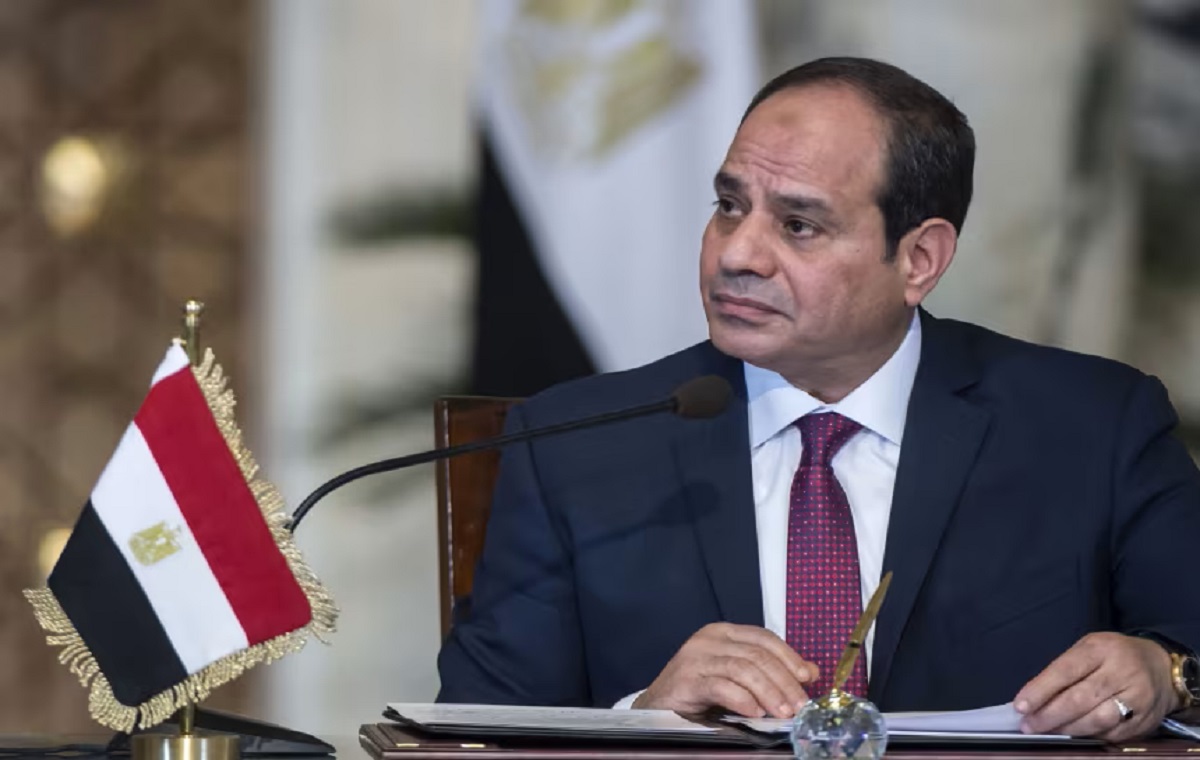
By Egyptian President Abdel Fattah al-Sisi urged the Asian Infrastructure Investment Bank (AIIB) to expand investment in Egypt into energy, transport, ports and logistics during talks with the bank’s president, Zou Jiayi, on Sunday.
The meeting comes as Egypt seeks to broaden financing partnerships for infrastructure and attract more private investment to support economic development.
Sisi told Zou that Egypt wanted to diversify its cooperation portfolio with the Beijing-based lender in sectors aligned with the country’s development priorities, according to Egyptian presidential spokesman Mohamed El-Shennawy.
He also highlighted Egypt’s economic advantages and investment opportunities, the spokesman said.
The Egyptian president praised the AIIB’s role in supporting development projects through financing and technical assistance, including projects carried out with state institutions, private companies and the banking sector.
Sisi also called for stronger cooperation between international financial institutions and developing economies, including greater use of innovative financing instruments and increased mobilisation of private capital.
The meeting was attended by Egyptian Finance Minister Ahmed Kouchouk, who is also Egypt’s governor at the AIIB, Foreign Minister Badr Abdelatty and AIIB Chief Investment Officer Konstantin Limitovskiy.
Egypt joined the AIIB as a founding non-regional member and has worked with the bank on projects across several infrastructure sectors.
Egypt’s Ministry of International Cooperation has previously put the value of the AIIB’s development cooperation portfolio in the country at about $1.3 billion. The portfolio has included water management, renewable energy, transport and financing for private-sector companies.
Among the projects backed by the bank is the Benban Solar Park in southern Egypt, where AIIB financing supported private-sector companies involved in renewable energy development.
The bank has also provided financing for transport infrastructure, including the Alexandria-Abou Qir Metro project. AIIB lists the Alexandria-Abou Qir Metro Line among its approved projects in Egypt, with approved funding of $250 million.
AIIB has also financed infrastructure through Egyptian banks. In 2019, it approved a $150 million facility for the National Bank of Egypt to provide financing for infrastructure-related subprojects.
The bank’s investment in Egypt reflects its broader mandate to finance infrastructure and promote sustainable development in its member economies.
AIIB began operations in 2016 and says it now has 111 approved members. The institution is capitalised at $100 billion and has an AAA credit rating from major rating agencies, according to its website.
During the meeting, Sisi reviewed Egypt’s wider development programme, including infrastructure projects and efforts to modernise transport, energy and telecommunications networks.
He also highlighted the country’s increased reliance on renewable energy and measures intended to improve the investment environment and strengthen economic competitiveness, according to the presidency.
Zou welcomed Egypt’s development efforts and highlighted the country’s geographical position as a link between Asia and Africa.
She also pointed to AIIB’s existing investment portfolio in Egypt, including projects involving the Benban Solar Park, the Alexandria-Abou Qir Metro and a container terminal at Damietta Port.
The discussions also covered regional and global economic developments and the effect of geopolitical tensions on investment, development and international financing flows.
Zou’s visit is part of her engagement with AIIB member governments following her appointment as president of the institution in January 2026. She previously held senior positions at China’s Ministry of Finance and represented China at several international financial institutions.
For Egypt, expanding Egypt AIIB investment could provide another source of financing as the government seeks to develop infrastructure while encouraging greater private-sector participation.
Sisi said international financial institutions should strengthen cooperation with developing countries and help mobilise private investment for development projects.
The Egyptian government has increasingly sought to use multilateral development banks and international partners to finance infrastructure, energy and other development priorities.
The AIIB’s involvement also fits within Egypt’s efforts to expand sustainable infrastructure financing. Previous cooperation has included renewable energy, water and sanitation, transport and credit facilities for private-sector activity.
The two sides did not announce a new financing package during Sunday’s meeting.
Instead, the talks focused on broadening future cooperation and aligning AIIB financing with Egypt’s national development priorities, according to the Egyptian presidency.
For the AIIB, Egypt represents an important member economy outside Asia and a strategic link between African, Middle Eastern and Asian markets. For Cairo, deeper cooperation with the bank could provide additional financing options for infrastructure and investment as the country seeks to strengthen economic resilience.
The discussions are expected to inform future cooperation between Egypt and the AIIB, with energy, transport, ports and logistics identified as priority areas.