
 By
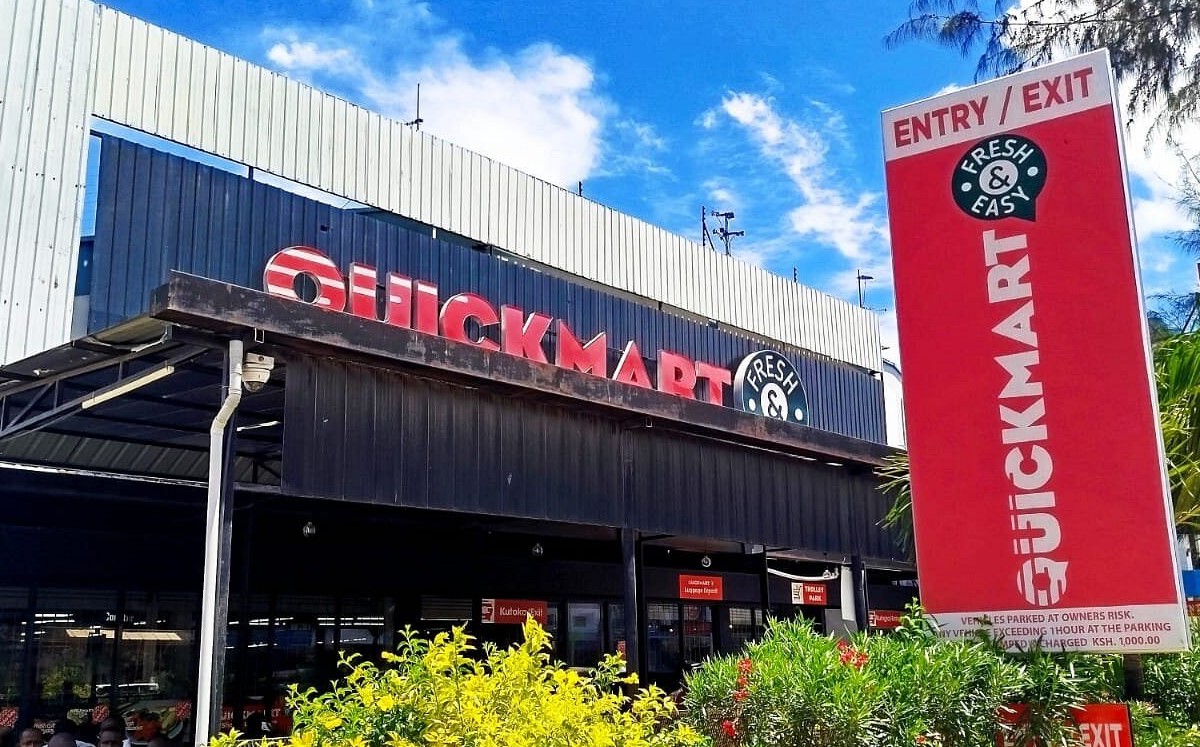
By Kenyan supermarket chain Quickmart said on Wednesday it intends to list on the Nairobi Securities Exchange’s (NSE) Main Investment Market Segment, as sole shareholder Sokoni Retail Kenya Limited (SRKL) plans to sell a 2 billion-share stake representing half the company.
The Quickmart IPO will not raise new capital for the retailer. All shares in the offer are existing stock held by SRKL, meaning the company itself will not receive any proceeds from the sale, Quickmart said in a statement.
The offer includes an over-allotment option of up to 15% of the shares on sale. Subject to approval from Kenya’s Capital Markets Authority (CMA) and the NSE, the listing is expected to launch on or around Sept. 30, 2026.
Quickmart has already filed a draft information memorandum with the CMA and the NSE for review.
The offer will target Kenyan retail and institutional investors, investors in other East African Community partner states, and foreign investors in jurisdictions where participation is permitted under local law. Shares will not be offered in the United States, Britain, Canada, Australia or Japan.
If the over-allotment option is not exercised, SRKL is expected to retain about 50% of Quickmart’s issued share capital. If exercised in full, that stake would fall to roughly 42.5%.
Quickmart traces its roots to 2006, when it was founded in Nakuru by the late John Kinuthia and his son, Duncan Kinuthia. That same year, Moses Nditika, Joram Ngeruro and Elijah Okello founded Tumaini in Nairobi’s Eastlands area.
Private equity firm Adenia Partners invested in Tumaini in 2018 and in Quickmart in 2019. The two businesses merged in 2020 and were rebranded under the Quickmart name from Jan. 1, 2020.
The company now operates 72 stores across 16 counties, based on hypermarket, supermarket and express formats, and estimates it holds about a 15% share of Kenya’s modern grocery retail market, making it the country’s second-largest chain by store count and turnover.
Quickmart runs an asset-light model, leasing rather than owning its stores, and sources most products through a direct-to-store supplier network supported by a fleet of 48 vehicles that redistribute inventory between locations.
Its Q-Points loyalty scheme has grown to about 2.5 million registered members as of June 30, 2026, from roughly 300,000 in 2021. Registered members accounted for about 74% of sales in the 2025 financial year and the first half of 2026, the company said.
Quickmart reported revenue of 50.4 billion Kenyan shillings ($390 million) for the year ended Dec. 31, 2025, with adjusted profit after tax of 1.7 billion shillings. Revenue grew at a compound annual rate of 18.4% between 2021 and 2025, the company said.
For the six months to June 30, 2026, revenue reached 27.3 billion shillings.
The company projects revenue of 58.2 billion shillings for full-year 2026 and 67.4 billion shillings for 2027, according to the financial outlook disclosed alongside the listing announcement.
Quickmart has paid dividends of 1.65 billion shillings for 2025, 1.2 billion shillings for 2024, 782 million shillings for 2023 and 106 million shillings for 2022. The board intends to maintain a payout ratio of at least 80% of annual profit, distributed semi-annually, and expects to pay out about 2.0 billion shillings in 2026 and 2.5 billion shillings in 2027.
Quickmart said its 2026-2030 strategy centres on opening 10 to 15 new stores annually, expanding its Q-SOKO e-commerce platform and delivery partnerships with Glovo, Uber Eats and Bolt, and investing in enterprise technology to improve category management.
The company flagged risks including its reliance on the Kenyan economy, competitive pressure from established rivals and new entrants, and its dependence on store lease arrangements.
Quickmart Group Chief Executive Peter Kang’iri said the planned listing was “an important milestone in Quickmart’s journey” after two decades of building the retailer’s national footprint.
Martha Osier, a partner at Adenia Partners, said the listing was “a natural next step” that would broaden Quickmart’s ownership base and let Kenyan investors participate in its growth, adding that the existing shareholder group intends to retain a substantial stake.
SBG Securities and Stanbic Bank Kenya are acting as lead transaction advisers on the offer, with Dyer and Blair Investment Bank as co-placing agent. SBG Securities is the sponsoring broker.