
 By
By The Economic Community of West African States (ECOWAS) reviewed progress towards launching its ECOWAS single currency, the ECO, in 2027 and called for faster work on outstanding requirements, the regional bloc said on Wednesday.
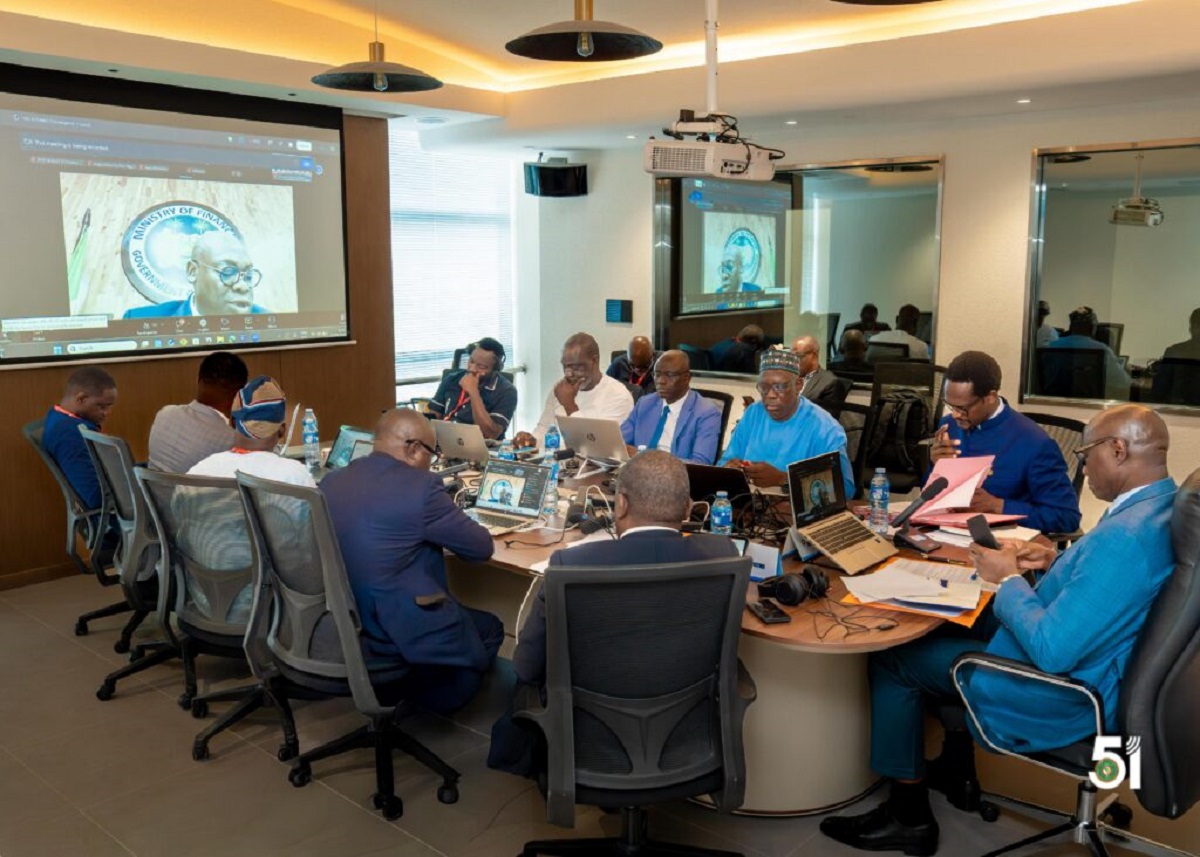
The 14th Session of the ECOWAS Convergence Council was held by videoconference on Sept. 7 as the bloc seeks to advance a project that has faced repeated delays and requires member states to meet economic convergence conditions.
The council reviewed a report from the Sept. 4 meeting of the Committee of Governors of ECOWAS central banks, as well as work by technical committees on macroeconomic policy and economic and monetary affairs.
The meetings assessed the economic performance of member states and their progress towards meeting the conditions required for the launch of the ECO, ECOWAS said.
Participants concluded that the objective of launching the currency in 2027 remains achievable. The council also asked the ECOWAS Commission to immediately convene the Presidential Task Force to accelerate preparations.
The latest discussions come as the bloc attempts to move from technical preparations to implementation of the ECOWAS single currency, which is intended to deepen monetary and economic integration among participating West African economies.
ECOWAS has previously said that the ECO project requires countries to achieve sufficient macroeconomic convergence before joining the monetary union. The convergence framework covers indicators including inflation, budget deficits, public debt, foreign reserves and monetary stability.
Under the ECOWAS Macroeconomic Convergence and Stability Pact, the primary convergence criteria include an annual inflation rate of no more than 5%, a budget deficit of no more than 3% of gross domestic product, central-bank financing of government deficits of no more than 10% of the previous year’s tax revenue and gross external reserves equivalent to at least six months of imports.
The bloc’s current push follows a July 2026 decision by West African leaders to reaffirm the 2027 target for the ECO while considering a phased approach under which countries meeting the convergence requirements could participate first.
Africanews reported that issues including the future central bank, decision-making arrangements and the participation of countries using the CFA franc remained under discussion.
The planned currency would also be introduced against a changing political and economic backdrop in West Africa.
Burkina Faso, Mali and Niger formally withdrew from ECOWAS on Jan. 29, 2025, after announcing their intention to leave the regional bloc.
ECOWAS said at the time that it would continue to recognise certain travel documents and maintain arrangements covering trade and the movement of people while discussions over future relations continued.
The departure of the three countries has complicated the regional integration landscape because all three remain part of the West African Economic and Monetary Union, whose members use the CFA franc. This creates additional questions over the eventual scope of the ECOWAS single currency.
ECOWAS had already acknowledged the challenges facing the ECO project at its 11th Convergence Council meeting in Abuja in March 2025. The meeting brought together finance ministers and central bank governors to examine the implementation of the ECO roadmap and measures to strengthen monetary cooperation.
At that meeting, then Nigerian Finance Minister Adebayo Olawale Edun called for the creation of a single regional currency as part of efforts to strengthen economic integration.
ECOWAS Commission President Omar Alieu Touray said the region faced obstacles that required coordinated action, including differences in the institutional and economic structures of member states.
The ECO project has been under development for years as part of ECOWAS’s broader effort to establish a monetary union. The bloc’s convergence framework is intended to ensure that participating economies have sufficiently similar economic conditions to support a common monetary policy.
The ECOWAS Parliament says its macroeconomic policy committee monitors member states’ performance against convergence criteria covering areas such as budget deficits, inflation and economic and monetary policies.
It identifies macroeconomic stability as a prerequisite for the eventual creation of a single West African currency.
ECOWAS currently has 12 member states following the departure of Burkina Faso, Mali and Niger: Benin, Cabo Verde, Côte d’Ivoire, The Gambia, Ghana, Guinea, Guinea-Bissau, Liberia, Nigeria, Senegal, Sierra Leone and Togo.
For the ECOWAS single currency to move ahead in 2027, the bloc must therefore complete remaining technical and institutional preparations while addressing differences in economic performance among member states.
The September Convergence Council meeting represents the latest step in that process. By directing the Commission to convene the Presidential Task Force without delay, the council signalled an effort to accelerate work ahead of the proposed launch.
ECOWAS said participants remained of the view that the 2027 objective was achievable, although the latest statement did not provide a detailed timetable for completing each outstanding requirement or specify which countries would qualify for the initial phase.
The next stages will depend on further assessments of member states’ economic convergence and decisions on the institutional framework for the currency.
For now, ECOWAS is maintaining its 2027 target, putting renewed focus on whether member states can meet the remaining requirements quickly enough to turn the long-running ECO project into a functioning regional currency.