
 By
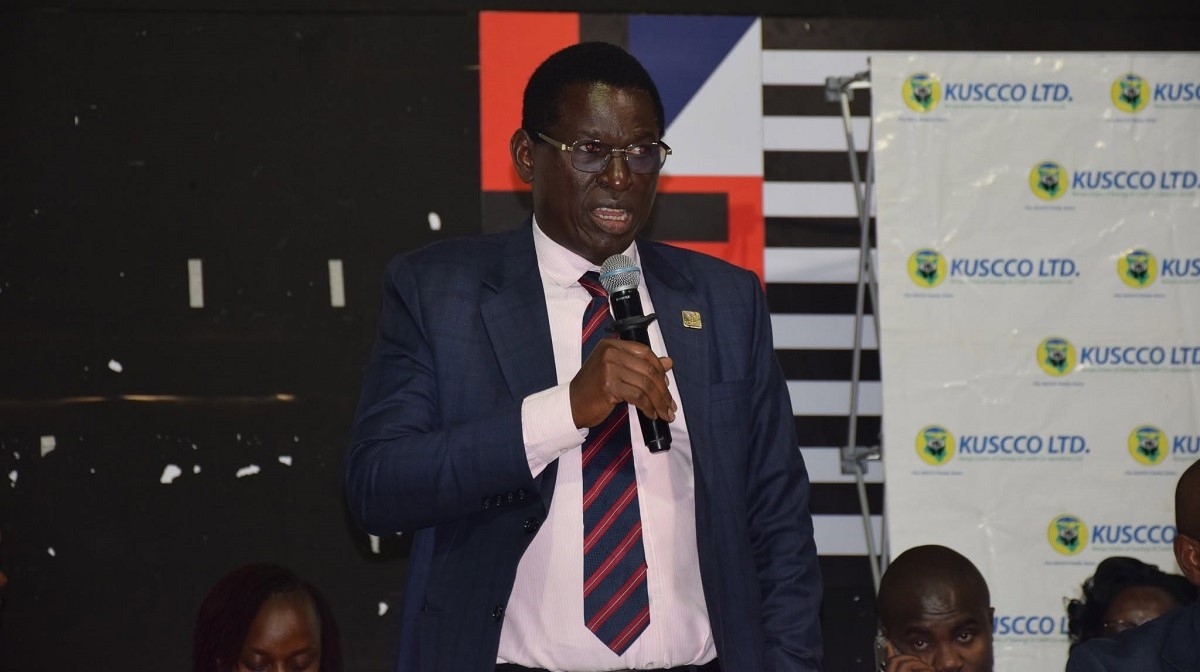
By Shareholders of the Kenya Union of Savings and Credit Cooperatives (KUSCCO) approved the union’s structured liquidation on Friday, after regulators found its liabilities exceeded its assets by nearly 12 billion Kenyan shillings ($93 million).
The decision, taken at a Special General Meeting convened by the Commissioner for Cooperative Development, David Obonyo, marks the formal wind-down of Kenya’s main umbrella body for savings and credit cooperatives, or SACCOs, following a multi-year financial scandal.
The meeting, held at All Saints Cathedral Church Hall in Nairobi, was called under Kenya’s Cooperative Societies Act, which allows the commissioner to direct the agenda of a special general meeting.
Shareholders were told KUSCCO held assets of approximately 5.4 billion shillings against liabilities of more than 17 billion shillings, according to the meeting notice. They resolved that the union undergo an orderly liquidation “in accordance with the applicable legal and regulatory requirements.”
Obonyo was mandated to oversee the liquidation, including securing and selling KUSCCO’s remaining assets, settling liabilities and liquidation costs, and distributing any residual proceeds to creditors and stakeholders under Kenyan law.
Shareholders also approved the creation of a new national association to take over SACCO advocacy, training, research and consultancy work previously carried out by KUSCCO, so as to ensure continuity of services to Kenya’s cooperative sector.
The agenda also included a proposal, put forward by the commissioner, to register a successor body under the name Kenya Federation of Savings and Credit Cooperatives Ltd, or KEFESCO.
Under the government’s plan, the new entity would operate as an apex advocacy and training federation rather than a financial intermediary, a shift officials say aligns with the draft Cooperatives Bill still before parliament.
The proposed KUSCCO-to-KEFESCO transition follows the discovery of an estimated 13.3 billion shilling hole in the union’s finances, uncovered by a forensic audit conducted by PwC. The audit found evidence of fraud, unexplained withdrawals and inflated assets at the union, which held more than 24.8 billion shillings in deposits from 247 member SACCOs.
The restructuring plan has already drawn legal challenges. A creditor, RUPSA Regulated NWDT SACCO Society Ltd, has asked the High Court in Nairobi to intervene, arguing the reorganisation of KUSCCO’s membership structure breaches existing court preservation orders tied to the union’s finances.
KUSCCO’s troubles have reverberated across Kenya’s cooperative movement, which regulators say serves more than 6.4 million members and holds assets worth close to 890 billion shillings nationally.
The union’s Central Finance Fund, which many SACCOs used for short-term liquidity, has since been extracted from KUSCCO’s management and repositioned as an independent entity, the Sacco Liquidity Fund, under oversight of the Sacco Societies Regulatory Authority (SASRA).
The government has separately moved to recover funds lost in the collapse, including through the seizure and auction of vehicles belonging to former KUSCCO executives, though officials acknowledge recoveries so far represent a small fraction of the losses.
Lawmakers have been working on a broader legislative overhaul of the sector, the draft Cooperatives Bill 2024, which would establish a Deposit Guarantee Fund to compensate SACCO members if a cooperative becomes insolvent.
The bill has been stalled in a legislative back-and-forth between Kenya’s two chambers of parliament. The National Assembly passed the bill with amendments in December 2024, the Senate passed its own amendments in February 2025, and the National Assembly rejected the Senate’s changes in April 2026, sending the legislation to a mediation committee.
KUSCCO’s collapse has been described by industry commentators as among the largest cooperative-sector failures in Kenya’s history, prompting calls for stricter oversight of SACCOs, which are regulated separately from commercial banks.