
 By
By The International Fund for Agricultural Development (IFAD) and Equity Group launched a $200 million climate adaptation finance mechanism on Friday to help smallholder farmers and rural businesses in East Africa cope with climate change.
The Africa Rural Climate Adaptation Finance Mechanism, known as ARCAFIM, was unveiled at the Africa Food Systems Forum 2026 in Kigali. Organizers said the initiative aims to close a persistent gap in climate adaptation finance, which has often failed to reach the smallholder farmers and rural enterprises most in need of it.
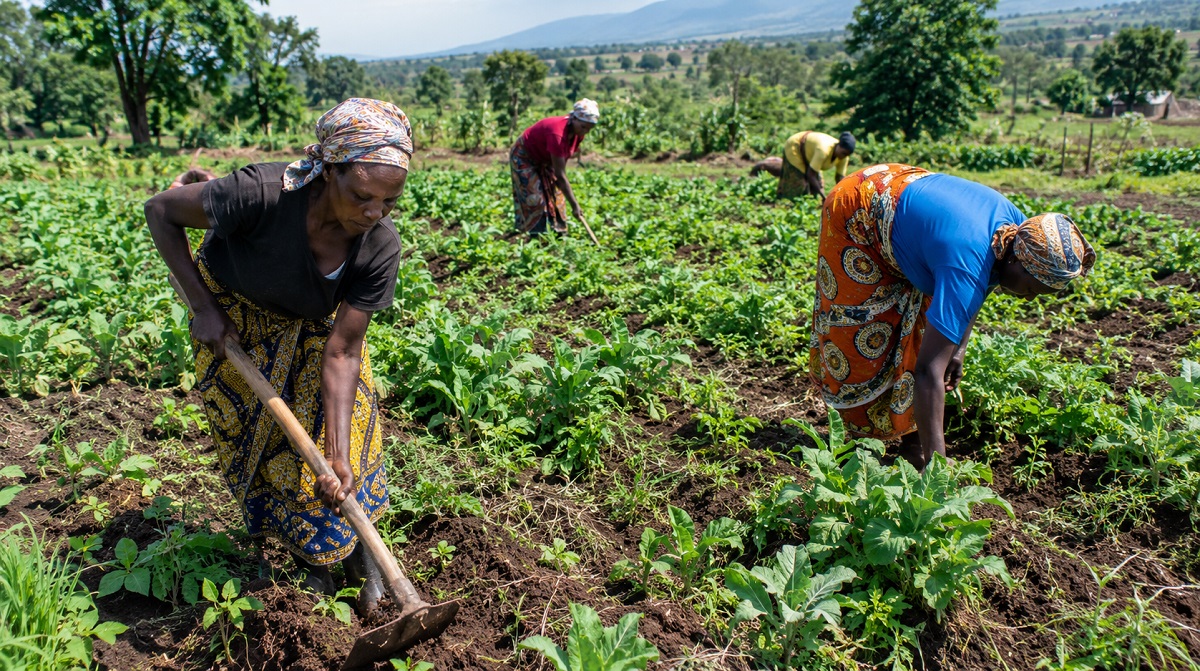
The 12-year mechanism will operate in Kenya, Uganda, Tanzania and Rwanda, targeting roughly 260,000 smallholder producers and 500 rural micro, small and medium-sized enterprises, according to the launch statement.
ARCAFIM is split into two components: $180 million in lending capital and about $20 million for technical assistance.
The mechanism is convened with co-financiers including the Green Climate Fund, Finland’s Ministry for Foreign Affairs and the Nordic Development Fund, and is also backed by the governments of Denmark and the European Union.
Of the $180 million lending pool, Equity Group is contributing $90 million from its own balance sheet, matching the concessional capital provided by the other financiers on a one-to-one basis.
The Green Climate Fund has committed $55 million to the initiative. Catherine Koffman, director of the fund’s Africa region department, said the support helped bring partners together to structure a mechanism able to expand climate finance for farmers and rural businesses.
Because the lending capital is expected to revolve through roughly four investment cycles over the mechanism’s 12-year term, organizers estimate it will generate about $266 million in loans to smallholder farmers and small and medium-sized enterprises across East Africa’s food systems.
Unlike many blended finance programs, ARCAFIM is structured so that a commercial lender, Equity Group, carries lending risk alongside public and concessional capital rather than simply administering donor funds.
The mechanism relies on a detailed climate adaptation taxonomy intended to transfer knowledge about viable investment options to participating banks, farmers and agribusinesses.
Organizers describe long-term commercial viability as the key measure of success, saying ARCAFIM is designed so that climate-resilience lending continues as a standard business line for African financial institutions once the concessional funding has been spent.
Gérardine Mukeshimana, IFAD’s vice president, said at the launch that the impact of climate adaptation finance would depend on turning global funding pledges into real investment in rural communities.
“ARCAFIM’s ambition is to make rural climate adaptation a recognizable, viable and sustainable business line for African financial institutions,” Mukeshimana said.
James Mwangi, group managing director and chief executive of Equity Group Holdings, said the mechanism was meant to change how the financial sector treats rural borrowers, describing smallholder farmers as entrepreneurs who had lacked a financial system built to support them.
Moses Nyabanda, managing director of Equity Bank Kenya, said the bank would channel financing to farmers and agricultural businesses both directly and through intermediaries such as microfinance institutions and savings cooperatives, while also building borrower capacity on climate adaptation finance.
Development finance institutions have increasingly turned to blended finance models, which pair public or concessional capital with private investment, to unlock funding for climate adaptation in Africa, where farmers face increasingly erratic rainfall, prolonged droughts and other climate-related shocks.
Access to climate adaptation finance has long been identified by development agencies as one of the biggest constraints facing smallholder farmers in sub-Saharan Africa, where agriculture employs a large share of the workforce but attracts a comparatively small share of formal lending.
Rural lenders have historically viewed smallholder agriculture as high-risk, limiting the flow of credit needed for irrigation, drought-resistant seeds and other adaptation measures.
By pairing donor and concessional capital with a commercial bank’s own balance sheet, ARCAFIM’s designers say they are testing whether climate adaptation finance can become a mainstream product for African banks rather than a donor-dependent niche.
Backers of ARCAFIM say the mechanism is designed with the flexibility to expand beyond East Africa if it proves commercially viable, though no timeline or additional funding for such an expansion has been announced.
The launch comes as multilateral lenders and donor governments face pressure to show that climate finance commitments are translating into measurable investment on the ground, particularly for smallholder farmers who produce a large share of the region’s food but have historically had limited access to formal credit.
IFAD is a United Nations specialized agency focused on rural development and food security. Equity Group is a pan-African financial services provider headquartered in Kenya.