
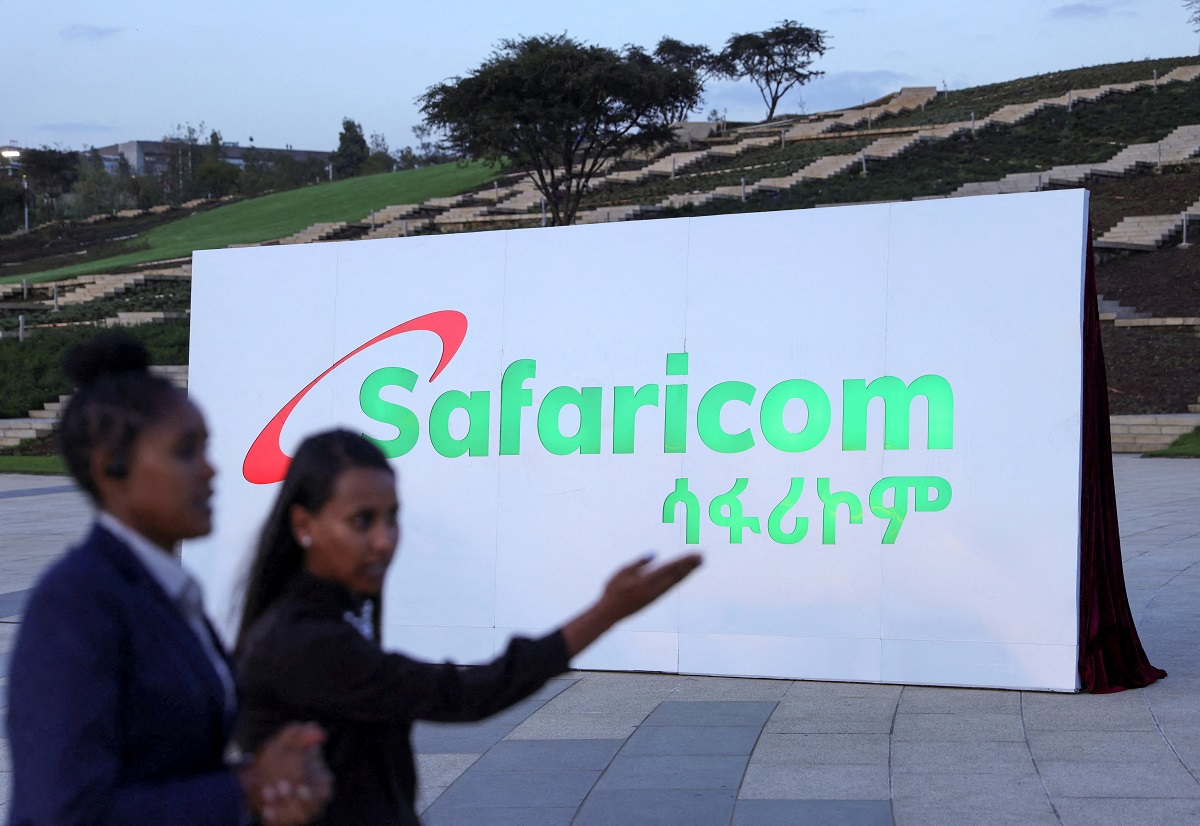
Safaricom Ethiopia said on Thursday it has surpassed 15 million active subscribers, marking five years since it received Ethiopia’s first full-service unified telecom operating license.
The company received its license from the Ethiopian government on July 9, 2021, and began commercial operations in October 2022, Safaricom said in a statement.
Safaricom Ethiopia said it had surpassed 15 million 90-day active subscribers within four years of starting commercial services, a milestone it described as one of the fastest customer growth trajectories among new telecom operators building a network and customer base from scratch.
The company, a unit of Kenya’s Safaricom, said its rapid scale-up “stands out in Africa,” citing the more than 15 million active subscribers and over 3,500 network sites built within five years.
Since receiving its licence, Safaricom Ethiopia said it has built more than 3,500 network sites, with coverage now reaching around 60% of the country’s population. All of its sites are 4G-enabled and 5G-ready, the company said.
Safaricom described the expansion as one of the fastest network rollouts by a greenfield telecom operator in Africa, and one of the fastest globally for a new entrant building a nationwide network from scratch. A greenfield operator refers to a company building network infrastructure from the ground up, rather than acquiring or upgrading an existing network.
The company said its network footprint now extends across the country, increasingly bringing connectivity to smaller towns and communities in Ethiopia.
Safaricom Ethiopia said it is approaching financial breakeven after five years of investment in network infrastructure, distribution, technology and operations, as its customer base and revenues continue to grow.
Ethiopia opened its telecoms sector to foreign competition in 2021, ending the decades-long monopoly of state-owned Ethio Telecom. Safaricom Ethiopia was the first new operator to receive a licence under the liberalisation process.
The company said the decision to liberalise the sector had proven significant, with the industry becoming “noticeably more vibrant” over the past five years. It said connectivity had expanded, the pace of digitisation had accelerated, internet speeds and data consumption had increased significantly, and digital payments had expanded across the country.
Safaricom Ethiopia also said it had contributed to the emergence of what it called world-class information technology talent in Ethiopia.
Beyond its core business, Safaricom Ethiopia said it has directly invested 139 million Ethiopian birr ($1.1 million) in community development and support, while its shareholders and partners have contributed an additional 545 million birr ($4.4 million).
That brings the total investment in communities to 684 million birr ($5.5 million) over the past four years of operations, the company said.
Safaricom Ethiopia said its entry into the Ethiopian market had created impact “across multiple layers,” from expanding connectivity and accelerating digital finance to supporting communities and empowering digital transformation in the country.
Safaricom Ethiopia is majority owned by a consortium led by Kenya’s Safaricom Plc, in which South Africa’s Vodacom Group and Britain’s Vodafone Group hold stakes. The consortium also includes Sumitomo Corp of Japan, Britain’s CDC Group (now British International Investment) and the International Finance Corporation.
The company competes with state-owned Ethio Telecom, which has historically dominated Ethiopia’s telecoms market and has expanded its own mobile money service, Telebirr, since Safaricom’s entry.
Ethiopia, Africa’s second-most populous nation with more than 120 million people, has been viewed by international telecom operators as one of the continent’s last major untapped mobile markets, given its historically low mobile penetration rate compared with regional peers.
Safaricom’s Ethiopian venture has required significant capital outlay from its parent company and partners, with Nairobi-listed Safaricom Plc previously flagging the investment as a drag on group earnings during the initial rollout period, before revenue growth began to offset costs.

Indumwa
Investreet Financial publishes financial education, market insights and practical resources to help readers make more informed financial decisions.