

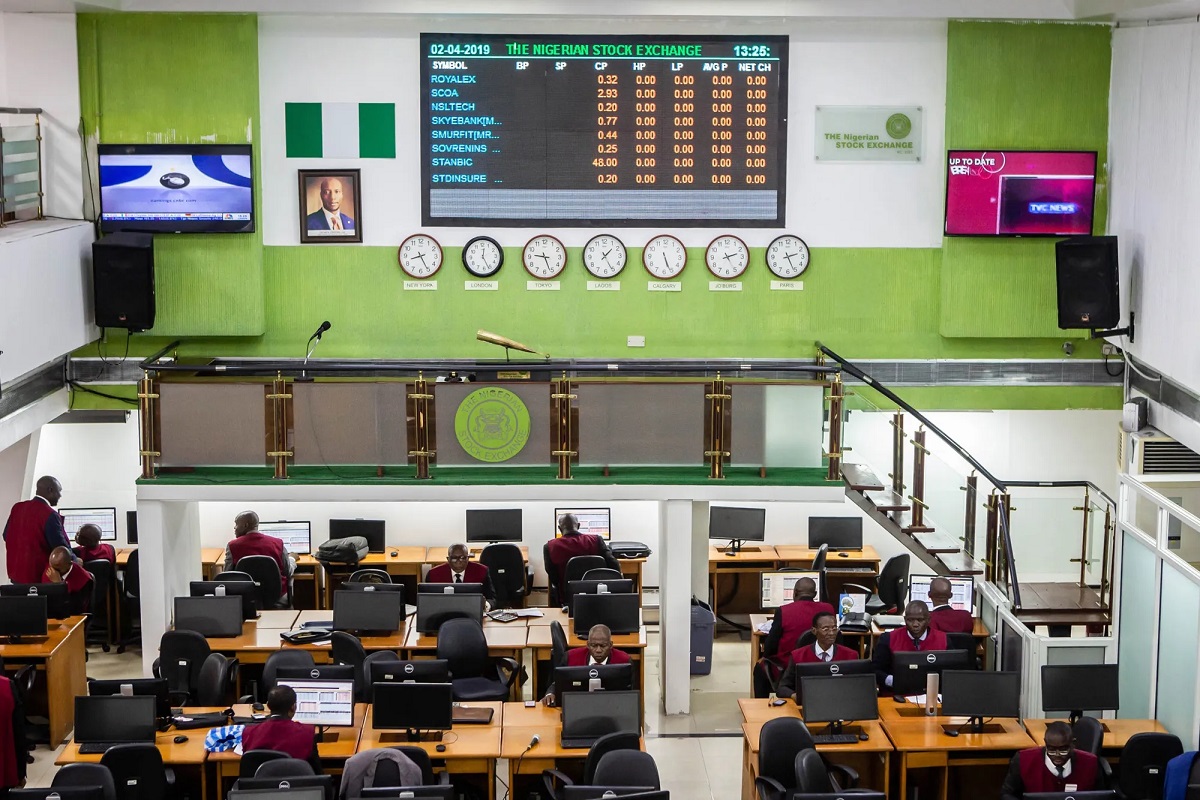
Nigeria’s Securities and Exchange Commission has proposed an African Depositary Receipts framework to help foreign companies raise capital from Nigerian investors and expand cross-border investment under a wider plan to strengthen the country’s capital market.
The proposal is part of the Nigerian Capital Market Master Plan 2.0, which sets out reforms intended to increase listings, improve access to financing and position Nigeria as a regional capital-markets hub. The plan covers 2026 to 2036.
The framework would allow companies from other African countries to reach Nigerian investors without immediately undertaking a full secondary listing on a Nigerian exchange.
The commission has proposed streamlined regulatory approvals, introductory listing-fee incentives, cross-border settlement and custody arrangements, and tax neutrality to encourage participation by foreign issuers.
The measures remain proposals under the master plan, rather than evidence that a new framework is already operational.
Framework aims to widen market access
Depositary receipts are financial instruments that represent shares or other securities held in custody. They allow investors to gain exposure to companies in another market through instruments traded under an approved local-market arrangement.
Under the proposed African Depositary Receipts framework, a company based outside Nigeria could potentially access Nigerian investors without immediately completing the requirements for a conventional secondary listing.
The plan also proposes a structured route through which a company that initially issues depositary receipts could later pursue a full secondary listing on a Nigerian exchange.
For issuers, such an arrangement could provide an additional source of capital and a way to reach investors beyond their home markets. For investors, it could offer access to businesses operating in other African economies through local market infrastructure, subject to the final rules and product arrangements.
The practical benefits would depend on the framework’s eventual design, including disclosure standards, investor protections, custody arrangements, settlement procedures and the treatment of dividends and other shareholder rights.
The Securities and Exchange Commission has also recommended closer regulatory cooperation with other African markets to reduce duplicated approvals and facilitate cross-border fundraising.
Potential partners identified in the plan include the African Securities Exchanges Association, the African Exchanges Linkage Project and the Bourse Régionale des Valeurs Mobilières, the regional stock exchange serving several West African countries.
Nigeria targets a larger capital market
The proposed framework forms part of a broader effort to expand the size and reach of Nigeria’s financial markets.
The strategy targets a capital-market size of 750 trillion naira over the next decade. The plan also seeks to increase annual diaspora investment through capital markets from $4 billion to $10 billion and expand assets held in collective investment schemes tenfold to $56 billion.
Collective investment schemes pool money from investors and allocate it across assets such as shares, bonds and money-market instruments, depending on their mandates.
Achieving the plan’s objectives would require more than new listing instruments. The market would also need to attract issuers, encourage sustained investor participation and provide reliable trading, settlement and custody infrastructure.
The commission has proposed further changes to listing requirements, including arrangements for foreign companies with secondary listings to use their combined global shareholder registers when assessing certain free-float and trading-volume requirements.
Free float refers to shares available for public trading rather than those held by controlling shareholders or otherwise restricted.
The plan also proposes dual-currency listings and more proportionate disclosure and listing requirements. It calls for a review of issuance fees and ongoing compliance costs, alongside measures to shorten regulatory approval timelines.
The reforms are intended to make Nigerian exchanges more competitive with other African markets competing for company listings and investment flows.
Regional integration is a central objective
Nigeria’s proposals reflect a wider effort to make it easier for investors and businesses to access capital across African borders.
The plan recommends a regional integration strategy aligned with the African Continental Free Trade Area, which aims to increase trade and economic cooperation among participating countries.
It also proposes a dedicated West African integration working group involving the Securities and Exchange Commission, Nigerian Exchange Group, FMDQ and the Central Securities Clearing System.
Regulatory cooperation and common approaches to prospectus requirements could help reduce the administrative burden faced by companies seeking investors in multiple jurisdictions. However, progress would depend on participating regulators agreeing on the necessary standards and procedures.
The proposals also envisage opportunities for Nigerian companies to pursue listings in other African markets, creating a two-way structure for regional capital raising.
Existing transactions offer an early test
Recent depositary-receipt initiatives linked to Nigerian companies illustrate how investors could access securities across borders, although they are not the same as the proposed African framework.
Dangote Petroleum Refinery and Petrochemicals has used global depositary receipts as part of efforts to reach investors in multiple jurisdictions during its public offering.
The offer deadline had been extended to October 27 to facilitate participation from additional jurisdictions. The initiative provides an example of how depositary receipts can support investor access beyond an issuer’s home market.
In Kenya, the Capital Markets Authority approved a short-form prospectus submitted by Renaissance Capital Kenya on October 5, allowing eligible Kenyan investors to participate in the Dangote refinery offering through global depositary receipts.
Such arrangements demonstrate the importance of coordination among regulators, brokers, exchanges and custodians when securities are offered to investors across national borders.

Indumwa
Investreet Financial publishes financial education, market insights and practical resources to help readers make more informed financial decisions.