
 By
By The European Bank for Reconstruction and Development (EBRD) has signed a $50 million (€43.1 million) cross-currency swap agreement with the Co-operative Bank of Kenya, the first such deal to use Kenya’s new interbank reference rate, KESONIA, the EBRD said.
The agreement is designed to expand access to financing denominated in Kenyan shillings and marks the first live-market use of the Kenya Shilling Overnight Interbank Average, the country’s benchmark rate for financial transactions.
It also represents the first drawdown under a broader $100 million (€86.2 million) facility agreed between the two institutions.
By structuring the swap around KESONIA, the EBRD and the Co-operative Bank of Kenya said they aim to demonstrate how the new benchmark can function in practice, building market confidence and encouraging wider adoption.
KESONIA was introduced as Kenya’s reference rate for financial transactions, replacing older benchmarks as part of a broader push to align the country’s money markets with international standards.
Regulators and market participants have been working to develop the rate as a transparent, transaction-based alternative for pricing loans, derivatives and other financial products.
The EBRD said the swap is intended to support the development of Kenya’s local financial markets by giving the new rate a real transaction on which to be tested.
The swap will strengthen the EBRD’s ability to raise and manage funding in Kenyan shillings, the bank said, enabling it to provide more local-currency financing to businesses in the country.
Access to shilling-denominated funding allows companies whose revenue is generated locally to avoid taking on foreign-exchange risk that can arise from borrowing in dollars or other hard currencies, according to the EBRD.
Currency mismatches; where a company earns revenue in one currency but has debt obligations in another, have long been cited by development finance institutions as a source of financial vulnerability for businesses in emerging markets, particularly when local currencies depreciate against the dollar.
Abdessamad Abouti, regional head of local-currency portfolio management at the EBRD, said the transaction was “an important milestone for Kenya’s financial markets.”
“We have worked closely with local authorities and market participants to support the development of KESONIA, and this swap shows how reforms can move from design to implementation, reflecting the EBRD’s longstanding commitment to developing local capital markets,” Abouti said.
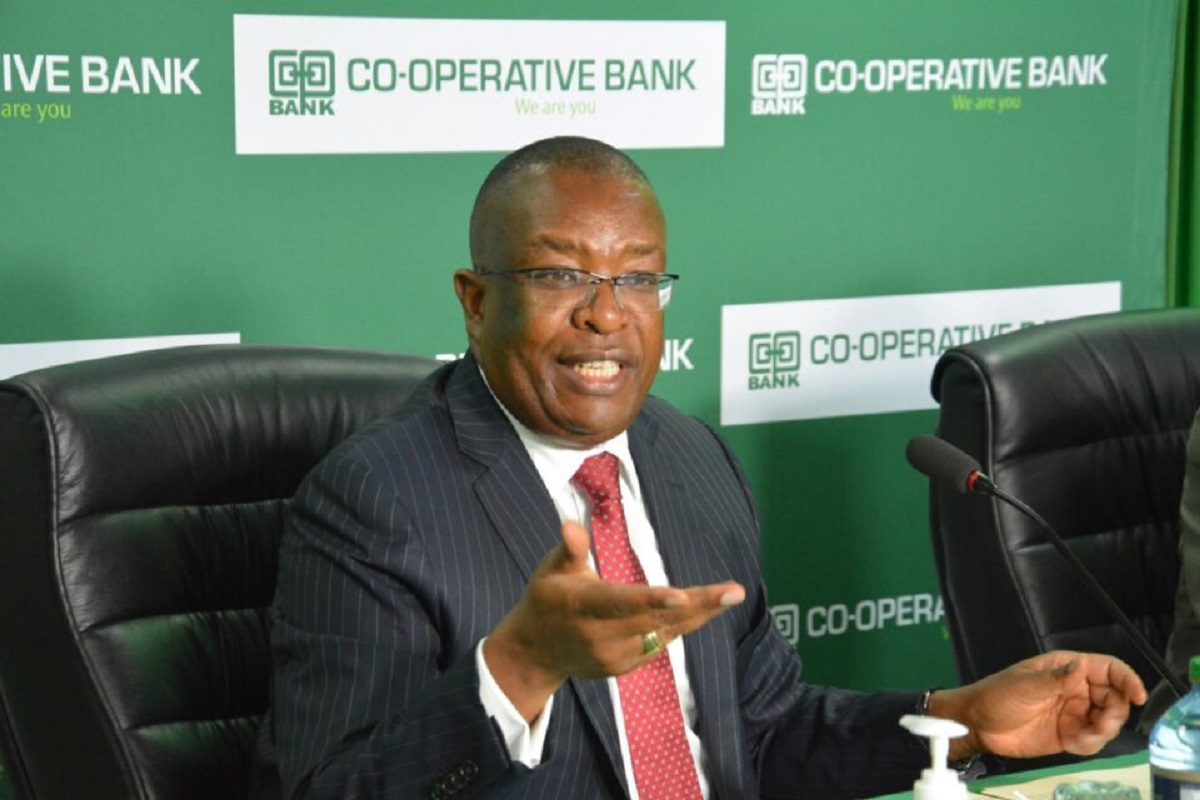
Mutahe Karuoro, treasurer at the Co-operative Bank of Kenya, described the deal as “a pleasing moment” for the bank and the country.
“Bringing KESONIA to life has been a collective journey — one built on trust, technical rigor, and a shared vision for our financial markets,” Karuoro said.
“This swap is a first, but it will not be the last. It opens the door for greater liquidity, better price discovery, and stronger participation from local and international investors.”
The EBRD said it expects KESONIA-linked transactions to play an increasingly significant role in fostering transparent pricing, improving risk-management practices and drawing greater participation from both domestic and international investors as Kenya continues its transition toward internationally recognised financial standards.
Development of robust, transaction-based reference rates has become a priority for many emerging-market regulators in recent years, following a global shift away from benchmarks such as Libor, which was phased out internationally after being discredited by rate-rigging scandals.
The EBRD began investing in Kenya in 2025, focusing on private-sector development, financial inclusion, sustainable infrastructure and the country’s green transition, according to the bank.