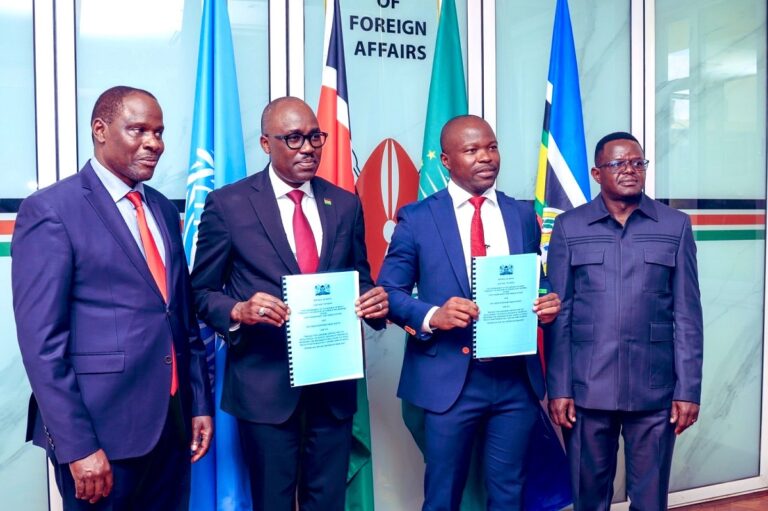

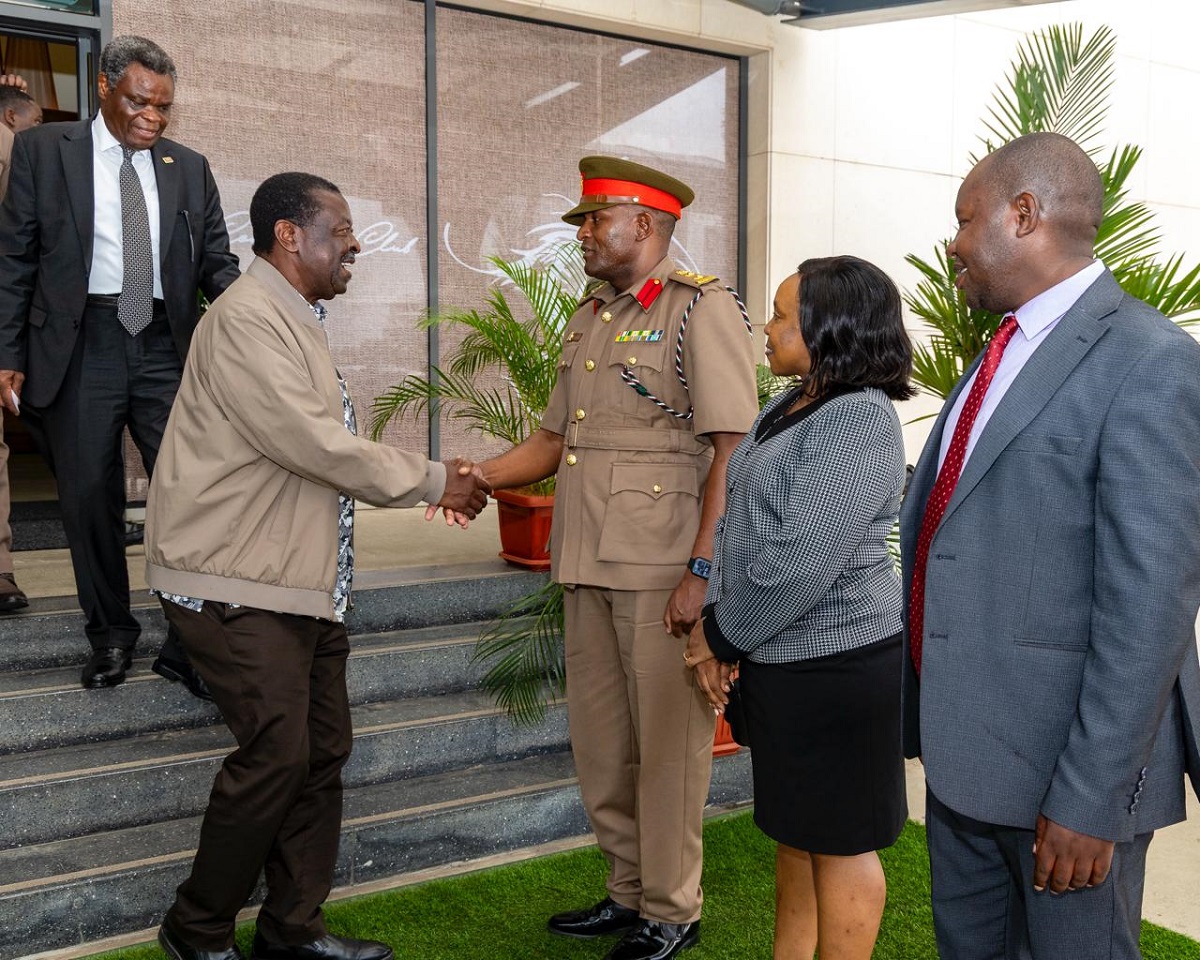
Kenya’s Prime Cabinet Secretary Musalia Mudavadi arrived in Ghana on Thursday ahead of an African Union meeting on sustainable financing, as African governments consider measures to reduce the bloc’s dependence on external funding.
Mudavadi, who also serves as Cabinet Secretary for Foreign and Diaspora Affairs, attended the 27th Extraordinary Session of the African Union Executive Council, held in Accra on Friday, November 13.
The meeting, jointly organised by the African Union Commission and the Government of Ghana, brought together ministers responsible for foreign affairs and finance from AU member states to discuss financing the continental organisation and its Peace Fund.
Kenya’s Ministry of Foreign and Diaspora Affairs said the discussions formed part of ongoing institutional reforms intended to strengthen the African Union’s financial independence, improve accountability and establish more predictable funding for continental programmes and peace support operations.
The government said Kenya viewed sustainable financing as a strategic priority in building a stronger and more effective continental institution capable of addressing Africa’s development and security challenges.
The session comes amid longstanding efforts by the African Union to increase the contribution of member states towards financing its programmes, which continue to rely significantly on external development partners.
Financial Independence on the Agenda
The African Union has been pursuing reforms aimed at strengthening its institutional effectiveness and reducing its dependence on international funding.
In a statement issued ahead of the meeting, the African Union Commission said the 27th Extraordinary Session would provide member states with an opportunity to consider an integrated framework for sustainable financing.
The proposed reform pathway includes greater financial autonomy, institutional rationalisation, improved programme effectiveness and a unified programme-based budget supported by a medium-term expenditure framework.
A medium-term expenditure framework is a budgeting approach that links government or institutional spending plans to priorities over several years rather than relying exclusively on annual budget allocations.
The African Union said the discussions would also address the financing of the AU Peace Fund, which supports the organisation’s peace and security activities.
The fund is an important part of efforts to strengthen the continent’s ability to finance peace support operations and respond to security challenges without excessive dependence on external partners.
According to the African Union Commission, the organisation continues to face funding constraints despite previous commitments by member states to increase domestic contributions.
The meeting was convened following decisions by the AU Assembly at its 38th and 39th Ordinary Sessions in 2025 and 2026, which called for an extraordinary session to consider measures for strengthening the financing of the Union and its Peace Fund.
Kenya Seeks Greater African Ownership
Kenya’s participation in the discussions forms part of a broader institutional reform agenda championed by President William Ruto in his capacity as the African Union’s Champion on Institutional Reform.
The reform agenda seeks to improve the Union’s ability to implement its continental priorities through stronger financial management, greater accountability and more effective decision-making.
Nairobi has argued that African countries need to assume greater responsibility for financing the institutions and programmes that support the continent’s development priorities.
The Kenyan government said the Accra meeting provided an opportunity to advance reforms that promote African ownership of the continental agenda, strengthen collective decision-making and improve the AU’s ability to deliver on its commitments.
The discussions also have implications for the implementation of Agenda 2063, the African Union’s long-term development framework aimed at building an integrated, prosperous and peaceful Africa.
Financing remains a central challenge to implementing the framework’s development priorities, which include infrastructure, economic integration, industrialisation, peace and security.
Peace Fund and Domestic Resource Mobilisation
One of the major issues under consideration is how to establish reliable sources of funding for the African Union and its peace operations.
The African Union has previously promoted a 0.2% levy on eligible imports as a mechanism through which member states could generate resources to finance the organisation.
The proposal is intended to provide a more predictable source of funding and reduce the Union’s exposure to fluctuations in external development assistance.
The financing discussions also focused on strengthening the AU Peace Fund, including the need for adequate capitalisation and a sustainable replenishment mechanism.
The African Union Commission said the proposed reforms would require a coordinated approach involving member states, continental institutions and African multilateral financial institutions.
Such institutions could play a greater role in mobilising domestic and regional capital to support the continent’s development priorities.
However, implementing the proposals will require political agreement among member states, improvements in financial governance and mechanisms to ensure that contributions are made consistently.
Mudavadi Reaffirms Kenya’s Position
Following the meeting, Mudavadi reaffirmed Kenya’s support for a financially independent and accountable African Union.
In remarks reported by Kenya’s Ministry of Foreign and Diaspora Affairs on November 14, Mudavadi said financial sovereignty was central to Africa’s ability to implement collective decisions and achieve the aspirations of Agenda 2063.
He represented President Ruto at the discussions, which brought together finance and foreign affairs ministers, the African Union Commission and representatives of African multilateral financial institutions.
Mudavadi said Kenya supported a proposed financing framework known as Option C, which he described as a pathway towards a financially sustainable and effective Union.
The framework includes a programme-based budget linked to Agenda 2063, improved resource allocation, predictable domestic financing and institutional efficiency.
Kenya also backed the proposed implementation of the 0.2% levy on eligible imports and the establishment of a $1 billion endowment target for the AU Peace Fund, alongside mechanisms for replenishing the fund.
Mudavadi said the Union should focus its resources on programmes capable of delivering measurable benefits to African citizens.
He also called for stronger accountability, transparency, prudent resource management and better coordination among AU institutions.
Ghana Calls for Action on Financing Reforms
Ghana, which hosted the meeting, also called on African countries to strengthen domestic resource mobilisation and take greater responsibility for financing the continental organisation.
Ghana’s Foreign Affairs Minister Samuel Okudzeto Ablakwa said political independence should be matched by financial sovereignty.
The African Union Commission’s Chairperson, Mahmoud Ali Youssouf, similarly urged member states to translate commitments towards African ownership into practical financing measures.
Ghana also announced its intention to host an Extraordinary Summit on African Financial Institutions in Accra in 2027 as part of efforts to strengthen the continent’s financial architecture.
The discussions reflect growing pressure on African institutions to establish more predictable funding arrangements as governments face competing development priorities and constraints on public finances.

Indumwa
Investreet Financial publishes financial education, market insights and practical resources to help readers make more informed financial decisions.