
 By
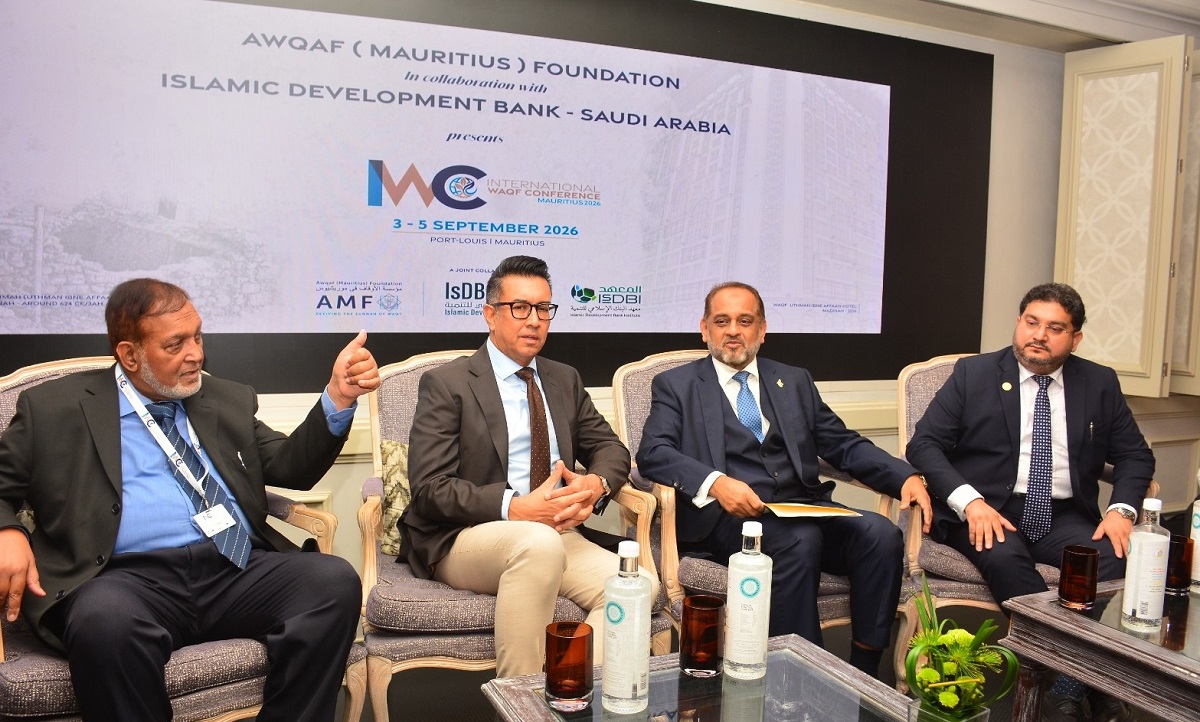
By The Islamic Development Bank Institute (IsDBI) and the Awqaf (Mauritius) Foundation (AMF) concluded a three-day International Waqf Conference in Port Louis on Sept. 5, bringing together government officials, religious leaders and Islamic finance experts to discuss the management of waqf assets.
The conference, held under the theme “Reviving Waqf for Community Empowerment: Building Strong Waqf Foundations through Strategic Management, Good Governance and Sustainable Investment,” ran from Sept. 3 to 5, according to a statement issued by IsDBI.
Waqf refers to an Islamic endowment in which an individual permanently donates an asset, such as property or cash, for religious or charitable purposes, with the proceeds typically used to fund community projects.
Participants included ministers and lawmakers, waqf founders and managers, diplomats, imams, legal practitioners, academics and youth representatives, IsDBI said.
Delegates traveled from Comoros, Madagascar, Malaysia, Singapore, the Maldives, Mozambique, Reunion, Seychelles, South Africa, Tanzania and the United Kingdom, in addition to hosts Mauritius.
The event examined governance models, asset development strategies, investment approaches and legal documentation for waqf institutions, as well as their role in promoting transparency and long-term social impact, the statement said.
AMF Chairman Najmul Hussein Rassool delivered the welcome address, followed by remarks from Mauritius’ Minister of Labour and Industrial Relations, Muhammad Reza Cassam Uteem, and Minister of Housing and Lands, Shakeel Ahmed Yousuf Abdul Razack Mohamed.
Yahya Aleem ur Rehman, Head of Knowledge Leaders at IsDBI, gave a keynote address titled “Reviving Waqf: Unlocking a Heritage Asset for Impactful Socio-Economic Development.”
Sessions during the first two days covered the history and principles of waqf, the current state of waqf in Mauritius, governance and accountability models, and international experiences from Southeast Asia, Europe and Africa, according to the organizers.
The programme also included a panel on Mauritius’ Waqf Act 1941 and a session on financing waqf projects through IsDB’s Awqaf Properties Investment Fund (APIF), led by Mohamed Ali Chatti and Hassan Mahfooz. Those discussions focused on legal frameworks, fiduciary oversight and financing mechanisms for the sector, IsDBI said.
The final day featured a capacity-building workshop titled “Strengthening Waqf Leadership: Capacity Building for Waqf Managers (Mutawallis) and Legal Practitioners,” which covered practical training in waqf management and the drafting of waqf deeds, known as waqfnama, in line with Sharia requirements and Mauritian law.
The training was delivered by experts from several jurisdictions, including Aboubacar Salihou Kante of the IsDB Institute, according to the statement.
Trainers addressed the roles of waqif (donors), mutawalli (managers), beneficiaries and regulators, as well as risk management, compliance and the use of technology in waqf administration.
IsDBI said its and APIF’s participation reflected the wider Islamic Development Bank Group’s mandate to support member countries in strengthening Islamic social finance institutions and to help unlock the development potential of waqf assets.
The bank institute credited the Awqaf (Mauritius) Foundation for organizing the conference and acknowledged contributions from speakers based in Mauritius, Saudi Arabia, Malaysia, Singapore, South Africa, Turkey and the United Kingdom.
The Islamic Development Bank Institute describes itself as the knowledge and research arm of the Islamic Development Bank Group, working to advance Islamic economics and finance through research, training and knowledge-sharing initiatives across the bank’s member countries.
Waqf assets have drawn increasing attention from Islamic finance institutions in recent years as governments and religious foundations look for ways to mobilize endowment funds for housing, education and other development projects, particularly in countries with significant Muslim populations across Africa and Asia.
Mauritius, an Indian Ocean island nation with a Muslim population of roughly 17%, has its own waqf framework dating to a law passed in 1941, which conference participants examined during a dedicated panel session, organizers said.