

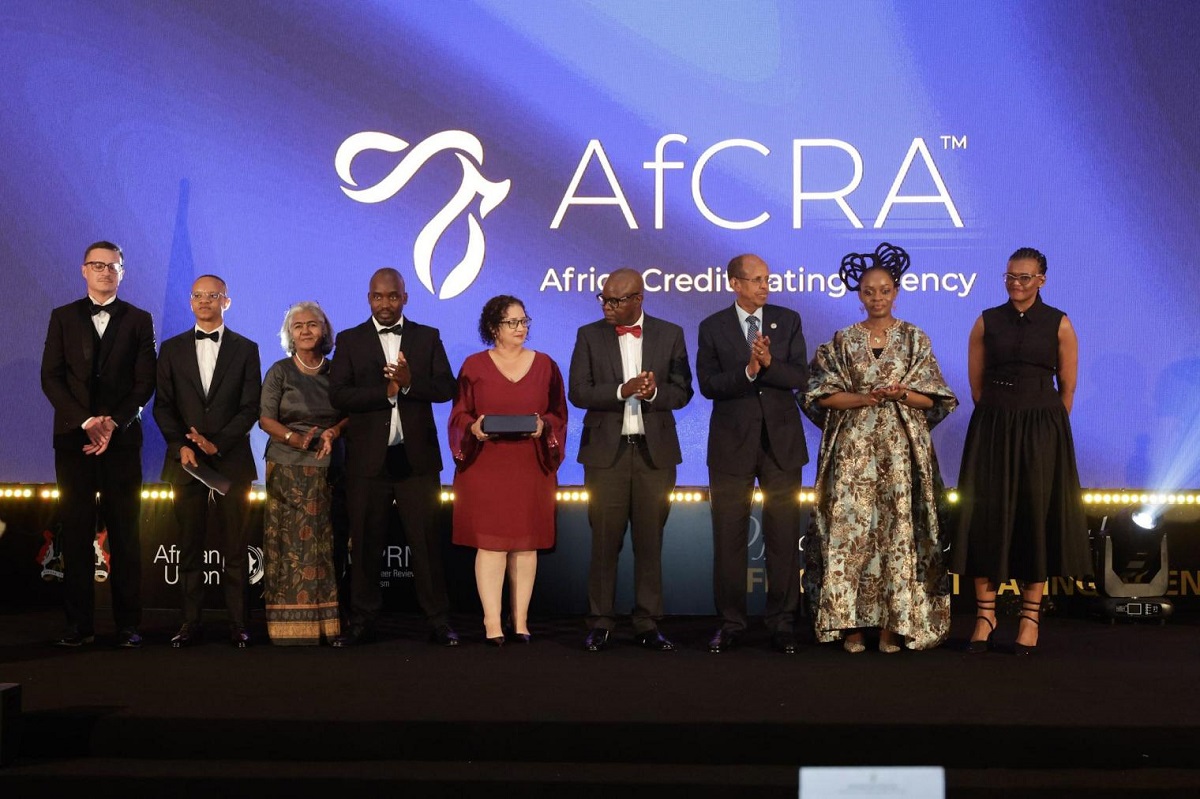
The African Union launched the Africa Credit Rating Agency (AfCRA) in Port Louis on Wednesday, creating a continent-focused institution intended to provide independent assessments of African sovereigns, businesses and institutions.
The launch follows years of work to establish an African credit-rating institution and took place alongside the second Annual African Conference on Credit Ratings, according to the African Union.
The Africa Credit Rating Agency is mandated to provide credit assessments based on African data, expertise and economic conditions, while complementing existing international rating agencies, the AU said.
The agency is intended to strengthen Africa’s financial architecture, improve access to information and provide investors with additional assessments of credit risk across the continent.
AfCRA will assess sovereigns, sub-sovereigns, corporations and public and private institutions. Its coverage could also extend to non-African entities, subject to decisions by its management, according to the AU.
The launch comes as African governments and policymakers seek to broaden access to capital markets and address concerns about how the continent’s credit risk is assessed by international investors.
Only 32 of the African Union’s 55 member states currently have ratings from the three dominant global rating agencies, leaving 23 without such ratings, according to the AU.
The three major global agencies are S&P Global Ratings, Moody’s Ratings and Fitch Ratings.
AfCRA says expanding credit-rating coverage could provide more African issuers with access to capital markets by making additional information about their creditworthiness available to investors.
The agency’s objectives include providing independent, evidence-based ratings for African sovereigns, corporations and institutions, as well as improving transparency and accountability in African financial markets, the AU said.
It also aims to expand market intelligence, reduce information gaps and support investment decisions.
The Africa Credit Rating Agency is structured as a private-sector-driven and self-funded institution. The AU says governments will not be allowed to own shares, a structure intended to protect the agency from political influence.
The African Peer Review Mechanism, an AU institution, oversaw the establishment of AfCRA, including work on its institutional framework, governance and methodology. The agency is now expected to operate independently.
The initiative dates back to 2018, when the AU Assembly endorsed the creation of an African credit-rating agency.
In July 2023, African ministers responsible for finance, monetary affairs, economic planning and integration adopted a declaration in Nairobi supporting AfCRA, according to the AU.
Institutional frameworks, governance arrangements and rating methodology were developed during 2024 and 2025 under the African Peer Review Mechanism.
The agency’s technical establishment was supported by Plus94, a South African research and intelligence firm specialising in credit ratings and market analytics, according to the AU.
AfCRA is headquartered in Port Louis, Mauritius. The AU said Mauritius was selected because of its financial sector, international connectivity and position as a recognised financial centre.
Regional subsidiaries are planned as part of the agency’s wider effort to establish a pan-African presence.
The African Development Bank, regional economic communities, national regulators, financial institutions and international partners are among the organisations identified as potential collaborators, according to the AU.
The agency’s launch also comes against a backdrop of rising debt-servicing pressures across Africa.
According to figures presented by the AU, Africa’s external debt service increased from $61 billion in 2010 to $163 billion in 2024. Interest payments have exceeded public spending on health or education in most African countries, the AU said.
AfCRA argues that stronger investor confidence and greater market transparency could help address some of the financing challenges facing African economies.
However, the agency’s establishment does not by itself guarantee lower borrowing costs. Its influence will depend on the credibility of its ratings, the quality of its methodology, the independence of its analysts and whether investors accept its assessments.
The launch represents a new addition to Africa’s financial-market infrastructure at a time when governments are seeking greater access to capital and more detailed assessments of local economic conditions.
The Africa Credit Rating Agency is expected to provide an additional source of credit information for investors while operating alongside established international rating agencies rather than replacing them.
The AU said the institution is designed to strengthen Africa’s voice in global financial governance and provide assessments that take greater account of African economic realities.

Indumwa
Investreet Financial publishes financial education, market insights and practical resources to help readers make more informed financial decisions.