
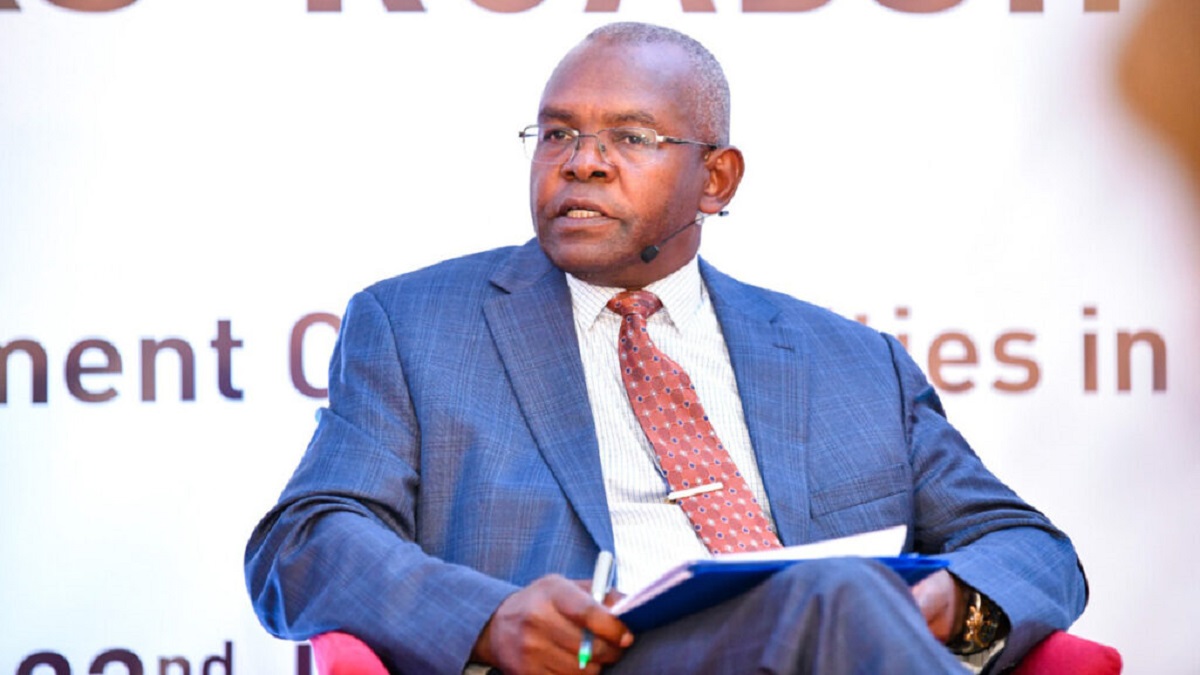
Kenya is negotiating fresh financing with the World Bank and African Development Bank to support its budget, with external funds expected by June 2027, Central Bank of Kenya Governor Kamau Thugge said on Friday.
The discussions include potential budget support through a World Bank Development Policy Operation and other financing arrangements, as the government explores ways to meet its funding needs while limiting reliance on domestic borrowing.
Thugge disclosed the talks on the sidelines of the International Monetary Fund (IMF) and World Bank annual meetings in Bangkok, Thailand. He said the government was pursuing several sources of external financing, although he did not provide details of the amounts under negotiation.
“They are looking at all kinds of financing… there’s quite a number of sources that they are trying to access,” Thugge told Reuters.
“Between now and June of next year is when that external financing will be expected.”
Kenya explores multiple financing options
The negotiations form part of Kenya’s efforts to secure additional external resources during the 2026/27 financial year, which ends in June 2027.
The World Bank Development Policy Operation, or DPO, is among the options under consideration. Such operations typically provide budget support linked to policy and institutional reforms agreed between the lender and the borrowing government.
The African Development Bank is also involved in discussions over potential financing, Thugge said, without disclosing the proposed amounts, terms or conditions.
A debt-for-food swap is another option being considered by Kenya, according to the central bank governor. He did not provide further details, saying he was not directly involved in those discussions.
The financing talks come as Kenya manages substantial public funding requirements and seeks to balance external borrowing with domestic debt issuance.
The government has increasingly had to weigh the cost of raising money in local markets against the availability and conditions of loans from international development institutions.
Concessional financing, which generally carries more favourable terms than commercial borrowing, can help reduce interest expenses, depending on the structure of the agreement.
IMF programme remains a possibility
Kenya is also expected to hold further discussions with the IMF, with a staff team scheduled to visit Nairobi in December for a regular Article IV consultation, Thugge said.
The consultation is part of the Fund’s routine economic surveillance of its member countries. It provides an opportunity to assess economic conditions, public finances and policy priorities.
Thugge said a new IMF programme would form part of the discussions, although funding from the institution was not included in the government’s current plans.
“The IMF funding is not in any of our planning. But obviously, were it to come in, it would help in several ways,” he said.
He said IMF financing could be cheaper than alternative sources, particularly domestic borrowing, because it would be concessional.
Thugge added that reducing the government’s need to borrow locally could create more room for banks to lend to private businesses.
Government borrowing from domestic markets can compete with private-sector borrowers for available funds, potentially affecting the cost and availability of credit. The extent of any impact would depend on overall liquidity, banks’ lending decisions and demand for loans.
Kenya’s discussions with multilateral lenders therefore have implications beyond the immediate budget financing requirement, although any benefits for private-sector credit would depend on the amounts secured and how borrowing needs subsequently change.
Emergency World Bank funding
The new financing discussions follow expectations that Kenya will receive about $400 million in emergency funding from the World Bank to address health and climate-related risks, Reuters reported in September.
The funding is intended to help the country respond to challenges that include an Ebola outbreak in the region and disruptions associated with the El Niño weather phenomenon.
The emergency financing is separate from the broader budget-support discussions described by Thugge. The terms, timing and final amounts of the additional financing under negotiation were not disclosed in his remarks.
The distinction is important because different financing facilities may have separate purposes, eligibility requirements and disbursement conditions.
Inflation risks remain under review
Alongside the financing discussions, the Central Bank of Kenya is monitoring inflation risks associated with higher energy costs, international financial conditions and developments in the Middle East.
The central bank maintained its benchmark lending rate at 8.75% for a fourth consecutive policy meeting, saying it expected inflation to remain within its target range in the short term.
Kenya’s energy regulator had raised maximum retail prices for petrol and diesel earlier in the week, citing higher import costs linked to the conflict in the Middle East.
Thugge said rising bond yields in developed markets could also add to inflationary pressures indirectly by weighing on the Kenyan shilling.
“Definitely risks are tilted (to the upside),” he said.
However, he noted that declining food prices could offset some of the inflationary impact from higher fuel costs. The central bank would need more time to assess how the competing pressures develop before deciding on its next policy move.
The outlook for inflation is relevant to government financing because higher domestic interest rates can increase borrowing costs, while currency movements can affect the local cost of imports and foreign-currency debt servicing.
Central bank maintains growth outlook
Thugge said Kenya’s economy was expected to grow by 5% in 2026 and 5.3% in 2027, above the IMF’s forecasts of 4.5% and 4.7%, respectively.
He cited activity in agriculture, industry and services as factors supporting the central bank’s more optimistic outlook.
“It’s likely our projection is closer to the truth than the IMF one,” he said.
The growth estimates remain forecasts and could be affected by changes in domestic demand, weather conditions, energy prices and the wider global economy.
The government’s ability to secure external financing will be one of several factors shaping the fiscal outlook in the current financial year. The amounts ultimately received, the timing of disbursements and the terms attached to the loans will determine how much the financing can ease pressure on the budget and domestic borrowing.

Indumwa
Investreet Financial publishes financial education, market insights and practical resources to help readers make more informed financial decisions.