
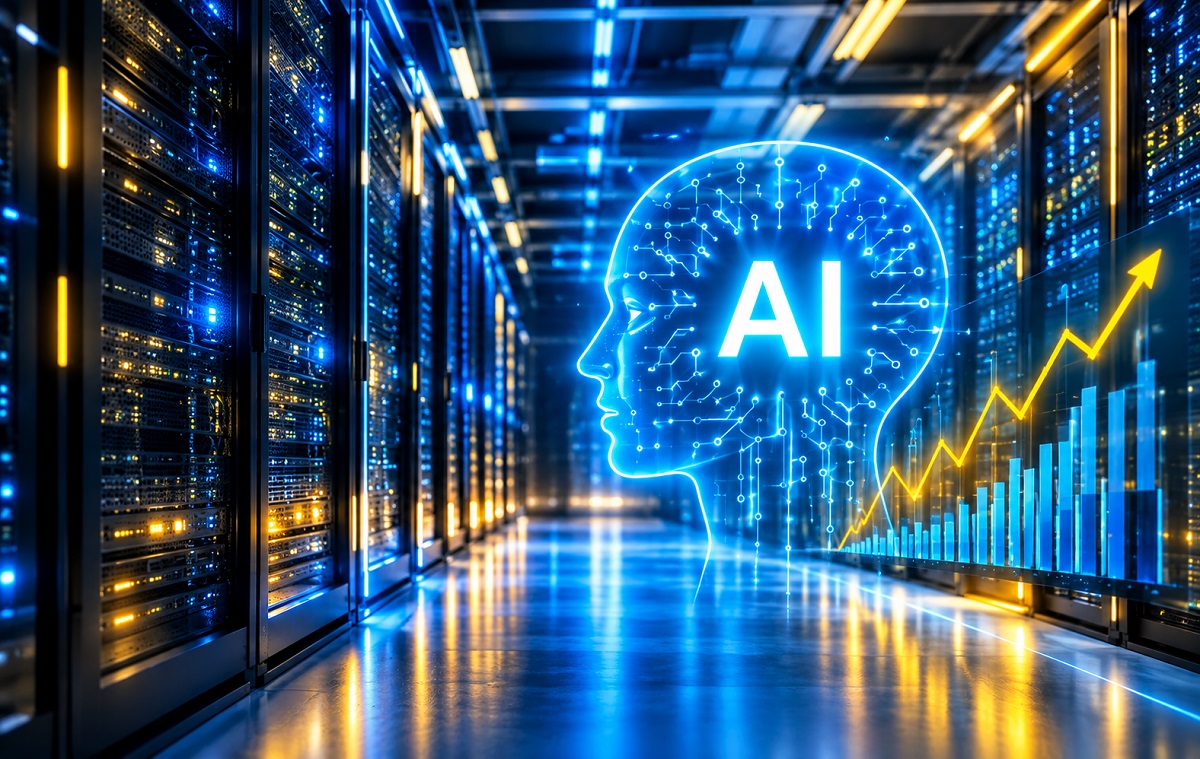
Investors are increasingly concerned that heavy spending on artificial intelligence could trigger a boom-bust cycle, although most remain invested, according to Bank of America (BofA), which reported that AI spending dominated recent discussions with its clients.
The bank’s European equity strategists said artificial intelligence capital expenditure accounted for 80% of discussions during recent client meetings in the United States, Switzerland and Scandinavia.
Interest rate concerns accounted for 15%, while the Middle East conflict represented the remaining 5%.
The findings highlight growing scrutiny of the financial sustainability of the AI investment boom, as technology companies continue to commit substantial resources to developing models, expanding computing capacity and building data centre infrastructure.
Despite concerns about a possible downturn, most investors participating in the discussions indicated they intended to maintain their exposure to the sector, reflecting expectations that spending on AI infrastructure will continue to expand.
According to Bank of America, some clients expressed concern that the current AI investment cycle could follow the pattern of previous technology-driven spending booms that eventually ended in market downturns.
The bank cited the technology boom of the 1990s and the railroad investment boom of the 1870s as historical examples discussed by investors.
A central concern is whether the enormous financial commitments being made by technology companies will generate sufficient economic returns to justify the spending.
Competition among artificial intelligence model developers is another source of concern. Bank of America said some clients were worried that intensifying competition could push down the prices charged for AI models and related services.
Falling prices could put pressure on revenue expectations and potentially affect companies’ willingness to maintain current levels of investment.
The concern is particularly relevant as companies compete to develop more advanced AI systems while seeking to attract customers and establish commercially sustainable business models.
However, the bank’s discussions did not indicate that most investors expected an immediate reversal in AI spending.
Despite growing concerns about the sustainability of the investment cycle, spending forecasts remain elevated.
Bank of America said consensus estimates for capital expenditure by major US cloud computing companies, commonly known as hyperscalers, were approaching $1 trillion over the following 12 months and continued to rise.
Hyperscalers are large technology companies that operate extensive cloud computing infrastructure and data centres. Their investments support the computing capacity required to develop and operate artificial intelligence applications.
The scale of projected expenditure illustrates the financial importance of AI infrastructure to the technology industry and the wider investment market.
Major technology companies have been expanding their computing infrastructure to meet demand for AI services. This includes investments in data centres, advanced semiconductors, networking equipment and energy infrastructure.
The projected spending also means that investors are increasingly monitoring whether companies can translate their infrastructure investments into sustainable revenue growth and profits.
For financial markets, the difference between continued investment and commercially successful investment is significant. Strong spending figures do not necessarily establish that the capital being deployed will generate returns that meet investor expectations.
Although concerns about an AI boom-bust cycle are increasing, Bank of America said most clients intended to remain positioned for further investment growth.
The bank said some investors believed that reducing their exposure too early could carry professional risks if the AI spending boom continued.
However, several clients indicated that they were prepared to change their investment positions if evidence emerged that the spending cycle was losing momentum.
In comments reported by the bank, its strategists said investors were prepared to reconsider their positioning if signs emerged that the boom was running out of fuel.
This suggests that investors are attempting to balance the possibility of further gains from AI-related spending against the risks associated with increasingly expensive infrastructure investments and intensifying competition.
The distinction is important because investor confidence in the long-term potential of artificial intelligence does not necessarily mean that every company or investment associated with the technology will deliver attractive financial returns.
Beyond artificial intelligence, Bank of America’s discussions also revealed differing expectations about the direction of interest rates.
The bank said a slight majority of clients expected bond yields to continue rising, while a smaller but growing group agreed with its view that rates could fall again.
Bond yields influence borrowing costs and the valuation of financial assets. Higher yields can increase financing expenses for companies investing heavily in infrastructure, while also affecting how investors value future corporate earnings.
For AI companies and infrastructure developers, financing conditions are particularly relevant because data centres, computing equipment and energy systems require substantial upfront capital.
Higher borrowing costs could therefore add pressure to investment plans, particularly where expected returns take several years to materialise.
The differing views among investors reflect uncertainty about the wider economic and financial conditions that could influence technology investment.
Bank of America also outlined a negative outlook for European equities, forecasting that the STOXX Europe 600 index could fall by approximately 10% to 580 by the second quarter, according to the report.
The bank also expected European cyclical stocks to underperform defensive stocks by a further 6%.
Cyclical stocks are shares of companies whose performance is closely linked to economic conditions, while defensive stocks generally represent businesses with demand that tends to be less sensitive to economic fluctuations.
Bank of America identified several factors that could disrupt AI investment and affect economic growth and corporate earnings.
These include intensifying competition, higher financing costs, electricity supply constraints and political opposition to data centre developments.
Electricity availability is an important consideration because AI data centres require significant amounts of power to operate large computing systems.
Restrictions on energy supply or difficulties securing suitable infrastructure could increase operating costs and delay planned projects.

Indumwa
Investreet Financial publishes financial education, market insights and practical resources to help readers make more informed financial decisions.