
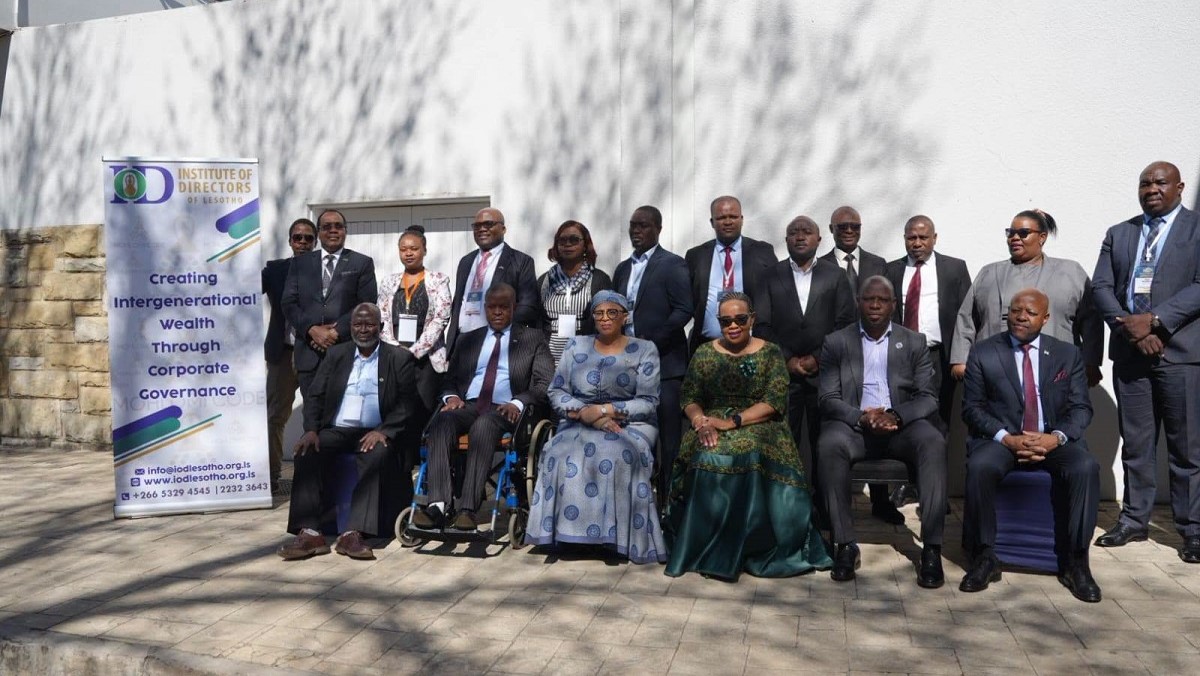
Lesotho is hosting a three-day summit of African government officials and state enterprise executives this week aimed at strengthening corporate governance standards at state-owned enterprises (SOEs) across the continent, organizers said.
The Africa State-Owned Enterprises Corporate Governance Summit, running from Aug. 24-26 in the capital Maseru, has drawn cabinet ministers, senior officials, SOE leaders and governance experts from Lesotho, Zambia, Zimbabwe, Seychelles, Mauritius, Tanzania, Malawi, Eswatini, Namibia and Kenya, according to the Lesotho government.
The gathering, held under the theme “Corporate Governance as a Tool for Transforming African SOEs into Global Competitors,” is intended to give participating countries a platform to compare governance models and identify reforms to improve the sustainability and competitiveness of publicly owned companies, the government said in a statement.
State-owned enterprises play an outsized role in many African economies, spanning utilities, transport and telecommunications, but have long faced criticism over weak oversight, political interference in board appointments and financial mismanagement.
Opening the summit, Lesotho’s Deputy Prime Minister, Justice Nthomeng Majara, said the reform agenda driving the meeting rests on four pillars.
The first is strengthening governance systems and accountability structures within SOEs, Majara said. The second involves professionalizing the state’s role as a shareholder by tightening discipline in how public enterprises are managed and overseen.
The third pillar calls for removing political influence from SOE boards while prioritizing competence and professionalism in board appointments, according to Majara. The fourth focuses on ensuring SOEs deliver value not only against current national development priorities but also for future generations.
Majara said the pillars were designed to shift SOE oversight beyond administrative compliance toward outcome-based governance, in which institutional integrity, accountability and performance become central to how public enterprises are run.
She said delegates should draw on lessons from other African countries, including Rwanda, Ethiopia, Kenya and Zambia, as well as from Singapore, Norway, South Korea and Germany, on separating the state’s ownership role from the daily management of SOEs.
That approach is meant to give professional managers greater operating autonomy while allowing governments to retain effective oversight as shareholders without interfering in day-to-day operations, Majara said.
In her keynote address, also titled “Corporate Governance as a Tool for Transforming African SOEs into Global Competitors,” Majara emphasized anti-corruption measures and regulatory reform as tools to protect public resources and strengthen institutional integrity, the government said.
Lesotho’s Minister of Finance and Development Planning, Dr Retselisitsoe Matlanyane, told delegates that SOEs function as an arm of government through which the state delivers services and advances development objectives.
Matlanyane said governments needed to set clear mandates, measurable timelines and performance expectations for SOEs, and appoint competent individuals to their boards. Clearly defined mandates were essential to holding SOEs accountable for their performance, she said.
She added that citizens bore responsibility for ensuring capable and ethical leadership was placed in senior governance positions at public institutions.
The first day of the summit was held under the theme “Architecting the Sovereign Mandate: Align Policy, Ethics, and Capital to Build Sustainable State Enterprises,” according to the government statement.
Organizers said the summit was designed to let African governments exchange practical experience, benchmark governance models against international peers, and identify reforms to improve the efficiency and competitiveness of public enterprises.
The event is being held as several African governments seek to overhaul the performance of state enterprises that have become a drain on public finances in some countries, due in part to weak governance and unclear accountability lines between ministries and enterprise boards.
Lesotho’s government described the strong turnout of officials from across the region as evidence of a shared commitment to improving SOE governance as part of broader efforts at economic transformation.

Indumwa
Investreet Financial publishes financial education, market insights and practical resources to help readers make more informed financial decisions.